
캐나다 비자나 영주권 신청서를 제출하면 한 명의 이민 심사관이 처음부터 끝까지 모든 서류를 직접 읽고 결정한다고 생각하는 분들이 많습니다.
그러나 Immigration, Refugees and Citizenship Canada, 즉 IRCC는 이미 일부 이민 신청에서 자동화, 고급 데이터 분석과 규칙 기반 시스템을 사용하고 있습니다.
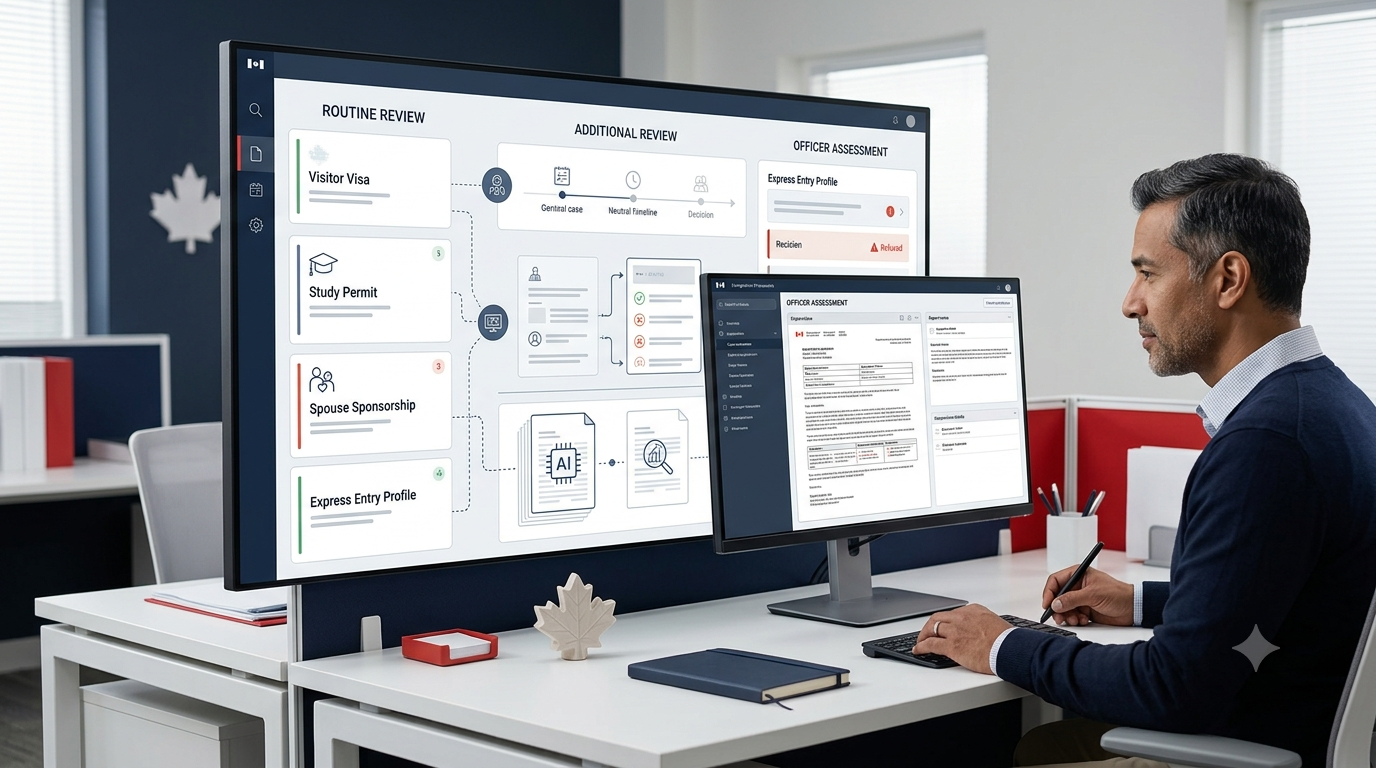
IRCC는 방문비자, 방문자 신분 연장, 배우자·파트너 초청과 일부 난민 스폰서 신청 등에서 일상적이고 명확한 사건을 선별하거나, 신청의 복잡성을 판단해 적절한 심사관에게 배정하는 도구를 운영하고 있습니다.
또한 장기적으로 기존의 Global Case Management System, 즉 GCMS를 새로운 디지털 사건관리 플랫폼으로 교체하고, 자동화와 통합 인공지능 기능을 확대할 계획입니다.
이에 따라 다음과 같은 질문이 생길 수 있습니다.
“캐나다 비자 승인이나 거절을 AI가 결정하나요?”
“AI가 제 신청서를 위험한 사건으로 분류할 수 있나요?”
“사람 심사관은 신청서를 직접 보지 않는 것인가요?”
“이전 신청서와 현재 신청서가 다르면 자동으로 적발되나요?”
“AI가 잘못 판단하면 이의를 제기할 수 있나요?”
“앞으로 GCMS Notes에도 AI의 판단이 표시될까요?”
핵심은 자동화 도구가 모두 같은 기능을 수행하는 것이 아니라는 점입니다.
일부 도구는 신청서를 분류하고 담당 심사관에게 배정하는 역할만 합니다.
일부 도구는 일상적 신청의 적격성 일부를 자동 승인할 수 있습니다.
일부 규칙 기반 절차에서는 전체 승인 결정을 자동 처리할 수도 있습니다.
그러나 일반적인 이민 신청에서 자동화 도구가 신청을 거절하거나 거절을 권고하는 것은 아니며, 부정적인 결정은 사람 심사관의 검토를 거쳐 이루어지는 것이 IRCC의 현재 공식 설명입니다.
※ 이 글은 특정 신청인이나 실제 자동화 심사 사건을 소개하는 것이 아니라, IRCC의 AI·자동화·고급분석 도구 사용현황과 향후 디지털 시스템 변화를 일반적으로 설명한 전문 정보입니다.
IRCC는 왜 AI와 자동화를 사용하나요?
IRCC는 매년 대량의 방문비자, 학생허가, 취업허가, 영주권과 시민권 신청을 처리합니다.
모든 신청서에 반복되는 행정업무를 사람이 처음부터 수작업으로 처리하면 심사기간이 길어지고 복잡한 사건에 집중할 시간이 줄어들 수 있습니다.
IRCC는 자동화와 고급분석 도구를 사용하는 목적을 다음과 같이 설명합니다.
일상적이고 명확한 신청을 신속하게 처리
신청서를 복잡성에 따라 분류
적절한 전문성을 가진 심사관에게 사건 배정
반복적인 행정업무 자동화
신청서의 기본정보를 정리하여 심사관에게 제공
추가 검토가 필요할 수 있는 사건 식별
대량의 신청 적체 관리
처리시간 단축
프로그램 무결성과 위험관리 강화
즉, 현재의 시스템은 모든 판단을 AI에 넘기기보다 단순·반복업무를 자동화하고 사람이 복잡한 사건에 집중하도록 하는 방향으로 운영되고 있습니다.
AI, 자동화와 고급분석은 같은 것인가요?
일반적으로 함께 언급되지만 정확히 같은 개념은 아닙니다.
자동화
사전에 정해진 규칙에 따라 반복적인 업무를 자동으로 처리하는 방식입니다.
예를 들어 특정 조건을 모두 충족하면 신청서를 다음 처리단계로 넘기는 규칙이 사용될 수 있습니다.
고급 데이터 분석
기존 신청자료와 여러 정보요소를 분석하여 신청의 복잡성, 필요한 전문성이나 처리경로를 분류하는 데 사용할 수 있습니다.
머신러닝
과거 자료의 패턴을 바탕으로 분류나 예측규칙을 만드는 기술입니다.
IRCC의 일부 처리도구에는 심사관이 만든 규칙과 과거 신청자료를 바탕으로 생성된 머신러닝 규칙이 함께 사용됩니다.
인공지능
자동화, 데이터 분석과 머신러닝을 포함할 수 있는 넓은 개념입니다.
IRCC는 새 사건관리 플랫폼에 통합 AI를 포함하여 심사관의 복잡한 판단을 지원하고 처리효율을 높일 계획이라고 설명합니다.
따라서 “IRCC가 AI를 사용한다”는 표현만으로 어떤 시스템이 어떤 결정을 하는지 단정해서는 안 됩니다.
현재 어떤 신청에 자동화가 사용되나요?
IRCC가 공개한 적용현황에는 다음과 같은 신청유형이 포함됩니다.
캐나다 밖에서 신청하는 방문비자
캐나다 내 방문자 신분 연장
캐나다 내 배우자·파트너 초청
캐나다 밖 배우자·파트너 초청
민간후원 난민 신청의 스폰서 부분
전자여행허가
일부 특별 임시조치 신청
각 프로그램에서 자동화 도구가 수행하는 기능은 서로 다릅니다.
어떤 도구는 적격성 일부를 자동 승인합니다.
어떤 도구는 단순히 신청서를 분류하고 담당 심사관에게 배정합니다.
따라서 특정 프로그램에서 자동화가 사용된다는 이유만으로 전체 신청이 사람의 검토 없이 결정된다고 볼 수 없습니다.
방문비자는 어떻게 처리되나요?
IRCC는 해외에서 제출되는 방문비자 신청을 분류하고 처리하는 데 고급 데이터 분석을 사용하고 있습니다.
도구는 일상적이고 명확한 신청을 식별하여 간소화된 처리경로로 보낼 수 있습니다.
일상적인 신청으로 판단되면 도구가 적격성을 승인할 수 있지만, 입국 가능성과 최종 승인 여부는 심사관이 검토합니다.
일상적이지 않거나 복잡한 신청은 심사관에게 보내집니다.
IRCC는 해당 분석도구가 신청을 거절하거나 거절을 권고하지 않는다고 설명합니다.
따라서 자동화 처리대상이 되지 않았다는 사실이 곧 거절을 의미하지는 않습니다.
추가적인 사람의 검토가 필요하다는 뜻일 수 있습니다.
방문자 신분 연장에도 자동화가 사용되나요?
캐나다 안에서 방문자 신분을 연장하는 Visitor Record 신청에도 자동화와 고급분석 도구가 사용됩니다.
일상적이고 승인 가능성이 높은 신청에서는 도구가 적격성을 자동 승인할 수 있습니다.
그 이후 심사관이 범죄·보안 등 입국 가능성을 검토하고 최종 결정을 내립니다.
복잡한 사건이나 추가 검토가 필요한 사건은 담당 심사관이 적격성부터 직접 검토합니다.
배우자 초청도 자동으로 심사하나요?
캐나다 내 배우자·파트너 초청과 해외 배우자·파트너 초청 신청에도 자동화 도구가 사용됩니다.
배우자 초청 신청은 일반적으로 다음 두 부분으로 나뉩니다.
스폰서의 자격
주신청인의 영주권 자격과 입국 가능성
IRCC는 일상적인 신청에서 스폰서와 주신청인의 적격성을 자동 승인하는 도구를 사용할 수 있습니다.
그러나 최종 결정과 입국 가능성 검토는 담당 심사관이 수행합니다.
관계의 진정성, 과거 혼인관계, 동거기록, 가족정보 불일치나 입국불허 문제가 있는 사건은 사람 심사관의 상세한 검토가 필요할 수 있습니다.
학생비자에도 AI가 사용되나요?
IRCC는 학생허가 신청을 복잡성과 필요한 전문성에 따라 분류하여 담당 심사관에게 배정하는 도구를 사용한다고 공개하고 있습니다.
이러한 분류도구는 신청을 승인하거나 거절하는 것이 아니라, 어떤 종류의 검토가 필요한지 판단해 적절한 업무그룹이나 심사관에게 보내는 역할을 합니다.
예를 들어 다음과 같은 요소가 있는 사건은 보다 세밀한 검토가 필요할 수 있습니다.
학업계획의 불명확성
과거 학력과 새 과정의 연관성
장기간의 학업 공백
재정자료의 복잡성
과거 거절
가족관계 또는 체류이력의 불일치
신청서와 증빙자료의 모순
입국 가능성 관련 문제
다만 IRCC는 자동 분류에 사용하는 세부 변수와 내부 평가방식을 모두 공개하지는 않습니다.
따라서 특정 요소 하나가 있다는 이유만으로 AI가 부정적으로 분류한다고 단정할 수 없습니다.
익스프레스 엔트리에도 AI가 적용되나요?
IRCC는 기존 GCMS를 대체할 새 사건관리 플랫폼을 개발하고 있으며, 초기 중점분야로 익스프레스 엔트리를 선정했습니다.
첫 번째 주요 기능 중 하나로 새로운 Expression of Interest 시스템을 마련하여 익스프레스 엔트리 신청과 후보자 관리를 지원할 계획입니다.
새 플랫폼에는 다음 기능이 포함될 예정입니다.
새로운 사건관리 시스템
통합 데이터 플랫폼
업무규칙 관리
고급분석 도구
명확한 사건의 자동화 확대
복잡한 결정을 지원하는 통합 AI
재고와 처리현황 관리
정책변경의 신속한 시스템 반영
그러나 새 시스템이 가동된다고 해서 AI가 익스프레스 엔트리 영주권 거절을 독립적으로 결정한다는 의미는 아닙니다.
IRCC는 AI가 심사관의 판단을 지원하되 사람의 재량을 대체하지 않는 방향을 제시하고 있습니다.
AI가 신청을 거절할 수 있나요?
IRCC의 현재 공식 설명에 따르면 일반적인 자동화·고급분석 도구는 신청을 거절하거나 거절을 권고하지 않습니다.
도구가 할 수 있는 일에는 다음이 포함될 수 있습니다.
신청서 분류
심사관 배정
기본정보 요약
일상적 신청의 적격성 승인
추가 검토 필요성 식별
일부 긍정적 결정 자동화
부정적인 결정은 사람 심사관이 신청서를 검토한 뒤 내려야 합니다.
다만 모든 자동화 절차가 동일한 것은 아닙니다.
전자여행허가처럼 사전에 정해진 규칙에 따라 자격과 입국 가능성을 자동 확인하고 최종 승인을 자동 처리할 수 있는 제도도 있습니다.
과거 일부 특별 임시프로그램에서도 규칙 기반 시스템이 전체 승인 결정을 자동화한 사례가 있습니다.
따라서 “AI는 아무 결정도 하지 않는다”거나 “AI가 모든 것을 결정한다”는 설명은 모두 지나치게 단순합니다.
자동 승인은 무엇을 의미하나요?
자동 승인은 신청서의 모든 부분이 아무런 추가 검토 없이 승인된다는 의미가 아닐 수 있습니다.
예를 들어 방문자 신분 연장이나 일부 방문비자 신청에서는 자동화 도구가 적격성을 승인한 뒤 담당 심사관이 입국 가능성을 검토하고 최종 결정을 내릴 수 있습니다.
적격성과 입국 가능성은 서로 다른 심사영역입니다.
적격성
신청인이 해당 프로그램의 기본요건을 충족하는지를 검토합니다.
입국 가능성
범죄, 보안, 건강, 허위진술과 그 밖의 입국불허 사유가 있는지를 검토합니다.
따라서 적격성이 자동 승인됐더라도 최종 승인 전에는 다른 심사가 남아 있을 수 있습니다.
자동화 대상이 아니면 불리한 것인가요?
그렇지 않습니다.
자동화 도구가 일상적인 사건으로 분류하지 않았다고 해서 부정적인 결정이 내려졌다는 의미는 아닙니다.
사건이 다음과 같은 이유로 사람의 검토를 필요로 할 수 있습니다.
추가 자료가 필요함
복잡한 가족관계
여러 국가의 체류·근무경력
과거 신청과 현재 정보의 차이
전문적인 자격검토
프로그램 규정의 해석 필요
입국 가능성 관련 검토
신청서가 자동화 규칙에 정확히 맞지 않음
복잡한 사건이라도 충분한 설명과 증빙이 있다면 승인될 수 있습니다.
반대로 자동화된 처리경로에 들어갔다고 해서 최종 승인이 보장되는 것도 아닙니다.
과거 신청서와 현재 신청서가 자동으로 비교되나요?
IRCC는 GCMS와 여러 내부 시스템을 통해 신청인의 과거 이민기록을 보유할 수 있습니다.
새 디지털 플랫폼은 데이터를 중앙화하고 고급분석과 프로그램 무결성 기능을 강화하는 방향으로 개발되고 있습니다.
따라서 다음과 같은 정보는 신청서 전체에서 일관되게 작성해야 합니다.
이름과 생년월일
혼인 및 가족관계
학력
근무경력
주소
여행이력
과거 비자 거절
취업허가와 학생허가 이력
범죄 및 법적 절차
대리인 이용 여부
다만 IRCC가 모든 과거 문서의 모든 문장을 실시간으로 자동 대조한다고 공식적으로 확인한 것은 아닙니다.
따라서 “AI가 모든 오류를 자동 적발한다”고 단정하는 것은 정확하지 않습니다.
그러나 데이터 통합과 분석기능이 강화될수록 기록의 일관성과 정확성이 더욱 중요해진다고 보는 것이 합리적입니다.
작은 날짜 차이도 문제가 될까요?
날짜 차이가 있다는 사실만으로 자동 거절되거나 허위진술로 확정되는 것은 아닙니다.
다만 다음과 같은 날짜가 서로 다르면 추가 검토가 발생할 수 있습니다.
입사일과 퇴사일
재학기간
혼인 및 동거 시작일
주소이력
캐나다 입국·출국일
과거 신청서 제출일
신분 만료일
범죄 또는 법적 절차 발생일
중요한 것은 차이가 왜 발생했고, 심사에 중요한 정보인지, 객관적인 자료로 설명할 수 있는지입니다.
AI 사용 여부와 관계없이 신청인은 최종 제출 전에 과거 신청과 현재 신청을 비교해야 합니다.
AI가 신청인의 SNS를 자동으로 조사하나요?
IRCC가 모든 신청인의 소셜미디어 계정을 AI로 자동 감시하고 승인·거절을 결정한다고 공식적으로 발표한 것은 아닙니다.
이러한 주장은 공식 근거 없이 확대해서는 안 됩니다.
다만 공개된 온라인 정보가 신청서 내용과 명백히 충돌하거나, 별도의 조사과정에서 관련 정보가 확인되는 경우 신뢰성 문제가 발생할 가능성을 완전히 배제할 수는 없습니다.
신청인은 온라인 정보를 심사기관에 맞춰 조작하기보다 제출하는 이민 신청서 자체를 사실에 맞고 일관되게 작성해야 합니다.
AI가 은행계좌나 개인 이메일을 마음대로 볼 수 있나요?
자동화나 AI를 사용한다는 사실만으로 IRCC가 신청인의 개인 은행계좌, 이메일이나 비공개 계정에 무제한 접근할 수 있는 것은 아닙니다.
IRCC의 정보수집과 사용은 관련 법률, 개인정보보호 의무와 정부정책의 적용을 받습니다.
신청인이 제출한 자료, 정부기관이 합법적으로 보유하거나 공유할 수 있는 정보와 법적으로 요청된 자료가 심사에 사용될 수 있습니다.
AI라는 기술의 존재가 새로운 무제한 조사권한을 자동으로 만드는 것은 아닙니다.
알고리즘의 편향이나 차별 가능성은 없나요?
자동화 시스템은 과거 자료와 설계된 규칙에 따라 작동하기 때문에 편향, 오류와 불공정성에 대한 우려가 있을 수 있습니다.
IRCC는 자동화 의사결정 도구에 대해 Algorithmic Impact Assessment, 즉 알고리즘 영향평가를 실시하고 다음과 같은 보호조치를 운영한다고 설명합니다.
잠재적인 차별 영향 검토
개인정보와 보안요소 반영
시스템 성능 감시
도구의 판단을 담당자가 변경할 수 있는 구조
정기적인 품질검토
적용 도구와 기능의 공개
사람 심사관의 최종 부정적 결정
그러나 영향평가가 존재한다고 해서 모든 오류 가능성이 완전히 사라지는 것은 아닙니다.
신청인은 결정내용과 거절사유가 사실관계에 맞지 않는다고 판단되면 적용 가능한 대응방법을 검토해야 합니다.
IRCC는 블랙박스 AI로 신청을 결정하나요?
IRCC는 신청에 대한 결정을 내릴 때 내부 작동방식을 설명하기 어려운 블랙박스 기술을 사용하지 않는다고 설명합니다.
신청 처리규칙은 일반적으로 검토 가능한 if-then 방식의 논리를 사용한다고 밝히고 있습니다.
다만 신청결정 외의 행정업무에서는 블랙박스 기술이 사용될 수 있습니다.
예를 들어 해외 비자사무소에 접수되는 문의메시지를 분류하고 우선순위를 정하는 업무에는 복잡한 기술이 사용될 수 있습니다.
따라서 신청결정 도구와 행정지원 도구를 구분해야 합니다.
사람이 최종 결정한다면 AI 사용은 중요하지 않은가요?
그렇지는 않습니다.
사람이 최종 결정을 하더라도 자동화 시스템은 다음 단계에 영향을 줄 수 있습니다.
어떤 처리경로로 이동하는지
어떤 심사관에게 배정되는지
일상적 사건으로 분류되는지
추가 검토가 필요한 사건으로 분류되는지
심사관에게 어떤 요약정보가 표시되는지
어느 사건이 우선적으로 처리되는지
처리속도
따라서 AI와 자동화는 최종 서명을 대신하지 않더라도 신청처리의 과정과 속도에 의미 있는 영향을 줄 수 있습니다.
AI가 잘못된 정보를 요약하면 어떻게 되나요?
자동화된 요약이나 분류가 신청서 내용을 정확히 반영하지 못할 가능성을 완전히 배제할 수는 없습니다.
신청인은 다음과 같은 상황에 주의해야 합니다.
신청서의 같은 질문에 서로 다른 답변
증빙자료와 신청서의 날짜 차이
번역문의 의미 오류
직업명과 실제 업무의 불일치
복잡한 가족관계를 설명하지 않은 경우
여러 고용형태를 하나로 단순화한 경우
첨부파일 이름과 실제 내용이 다른 경우
중요한 설명을 관련 없는 위치에 넣은 경우
신청서가 복잡하다면 별도의 설명서와 명확한 증빙목록을 사용하여 사람이든 시스템이든 핵심 사실을 정확히 이해할 수 있도록 구성하는 것이 중요합니다.
GCMS Notes에서 AI 판단을 확인할 수 있나요?
GCMS Notes에는 담당 심사관의 메모, 신청 처리내역과 일부 시스템 기록이 포함될 수 있습니다.
다만 모든 자동화 분류기준, 알고리즘 규칙이나 내부 모델의 세부 판단이 신청인의 GCMS Notes에 그대로 공개된다고 단정할 수는 없습니다.
GCMS Notes를 받더라도 다음 내용이 모두 표시되지 않을 수 있습니다.
시스템이 사용한 전체 변수
구체적인 알고리즘 규칙
내부 위험관리 기준
모델의 상세 점수
다른 신청인과의 비교자료
따라서 GCMS Notes는 유용한 자료일 수 있지만, 자동화 시스템의 전체 작동방식을 완전히 공개하는 문서로 보기는 어렵습니다.
AI 때문에 거절됐다고 생각되면 어떻게 해야 하나요?
먼저 실제 거절사유와 기록을 확인해야 합니다.
단순히 결정이 빨리 나왔거나 정형화된 문구가 사용됐다는 이유만으로 AI가 부당하게 거절했다고 단정해서는 안 됩니다.
확인할 수 있는 자료에는 다음이 포함될 수 있습니다.
거절통지서
담당 심사관의 사유
GCMS Notes
제출한 신청서 사본
첨부 증빙자료
과거 신청기록
관련 프로그램 지침
절차적 공정성 제공 여부
그다음 사건에 따라 다음 대응을 검토할 수 있습니다.
오류를 보완한 재신청
사실관계 정정
추가 증빙자료 제출
재검토 요청
사법심사 가능성 검토
개인정보 또는 자동화 관련 기록 요청
어떤 대응이 적절한지는 거절사유, 신청종류와 법정기한에 따라 달라집니다.
새 디지털 플랫폼은 무엇이 달라지나요?
IRCC의 Digital Platform Modernization 사업은 기존의 오래된 시스템과 여러 개의 온라인 포털을 단계적으로 현대화하는 장기 사업입니다.
주요 변화에는 다음이 포함됩니다.
여러 서비스를 하나의 온라인 계정으로 통합
신청상태와 문의서비스 개선
종이 중심 절차의 디지털화
기존 GCMS를 새 사건관리 플랫폼으로 교체
데이터의 통합 및 접근성 개선
명확한 사건의 자동화 확대
복잡한 판단을 지원하는 통합 AI
새로운 익스프레스 엔트리 관리체계
디지털 비자와 디지털 이민서류 검토
새 온라인 계정은 이미 일부 방문비자와 캐나다 내 여권갱신 신청자에게 적용되고 있으며, 향후 다른 신청유형으로 확대될 예정입니다.
GCMS가 바로 없어지는 것인가요?
아닙니다.
새 플랫폼은 여러 단계에 걸쳐 개발되고 적용됩니다.
기존 GCMS와 여러 포털이 하루아침에 전부 폐지되는 방식이 아니라, 신청종류와 기능별로 순차적으로 이전될 가능성이 큽니다.
따라서 전환기간에는 신청인마다 사용하는 계정과 처리시스템이 다를 수 있습니다.
신청인은 인터넷의 일반적인 안내보다 본인의 신청종류에 제공되는 공식 신청경로와 IRCC 계정 지침을 따라야 합니다.
디지털 비자는 언제 시행되나요?
IRCC는 모로코 출신 일부 방문자를 대상으로 디지털 비자 기술 시범사업을 실시했고, 2026년 2월 이를 완료했습니다.
시범사업에서는 디지털 자격증명의 발급, 확인, 변경과 취소 기술이 정상적으로 작동하는지를 검토했습니다.
IRCC는 장기적으로 자격을 갖춘 신청인이 실제 비자 스티커를 받기 위해 여권을 제출하지 않아도 되는 방안을 마련하는 데 시범결과를 활용할 예정입니다.
그러나 이것이 현재 모든 국가와 모든 방문비자 신청인에게 디지털 비자가 전면 시행됐다는 의미는 아닙니다.
한국인 신청인에게 적용되는 시점과 구체적인 절차는 별도의 공식 발표를 확인해야 합니다.
신청인이 준비해야 할 것은 무엇인가요?
AI 시대라고 해서 특별한 비법이나 새로운 양식이 필요한 것은 아닙니다.
오히려 기본적인 정확성과 일관성이 더 중요합니다.
다음 사항을 확인하는 것이 좋습니다.
현재 신청서와 과거 신청서 비교
이름·생년월일·여권정보 확인
학력과 경력의 날짜 통일
주소와 여행이력의 공백 확인
가족관계 정보 일치
과거 거절과 입국기록 공개
증빙자료와 신청서 답변의 일치
복잡한 사실관계에 대한 설명서 첨부
정확한 번역
제출 전 전체 신청서 사본 보관
대리인이 작성한 신청서의 최종 확인
자동화 시스템을 피하려고 내용을 단순화하거나 중요한 정보를 빼는 방식은 적절하지 않습니다.
복잡한 사건은 복잡한 사실관계를 정확히 설명하는 것이 중요합니다.
자동화 심사에 관한 흔한 오해
“AI가 낮은 점수를 주면 바로 거절된다”
IRCC는 일반적인 자동화 도구가 거절하거나 거절을 권고하지 않는다고 설명합니다.
“신청 결과가 빨리 나왔으면 AI가 심사한 것이다”
빠른 결과만으로 어떤 처리도구가 사용됐는지 알 수 없습니다.
“자동화 대상이 아니면 거절 가능성이 높다”
사람의 검토가 필요하다는 뜻일 수 있으며 거절을 의미하지 않습니다.
“사람 심사관이 최종 결정하므로 자동화는 아무 영향이 없다”
분류, 배정, 요약과 처리경로에는 영향을 줄 수 있습니다.
“AI가 모든 신청인의 SNS와 은행계좌를 조사한다”
IRCC가 그러한 무제한 자동감시를 운영한다고 공식 발표한 것은 아닙니다.
“AI를 사용하면 허위진술이 자동으로 확정된다”
허위진술은 사실관계와 법적 기준에 따른 판단이 필요하며, 자동 불일치 감지만으로 최종 결론이 내려지는 것은 아닙니다.
제출 전 체크리스트
신청서의 모든 날짜가 증빙자료와 일치하는가?
과거 캐나다 신청서와 다른 답변이 있는가?
다른 답변이 있다면 합리적인 설명과 자료가 있는가?
학력과 경력 사이의 공백을 설명했는가?
가족정보가 모든 신청서에서 일치하는가?
과거 거절과 체류이력을 정확하게 공개했는가?
복잡한 사실관계를 단순한 한 문장으로 축소하지 않았는가?
증빙자료의 파일명과 내용이 일치하는가?
번역문이 원문을 정확히 반영하는가?
대리인이 작성한 최종 신청서를 직접 검토했는가?
제출한 신청서 전체 사본을 보관했는가?
IRCC 계정의 메시지와 기한을 확인하고 있는가?
공식 정보 확인
정리하면
IRCC는 이미 일부 방문비자, 방문자 신분 연장, 배우자·파트너 초청과 학생허가 신청의 분류·처리에 자동화와 고급분석 도구를 사용하고 있습니다.
자동화 도구는 일상적이고 명확한 신청을 식별하고, 신청을 복잡성에 따라 분류하며, 적절한 심사관에게 배정하거나 적격성 일부를 자동 승인할 수 있습니다.
그러나 IRCC의 현재 공식 설명에 따르면 일반적인 자동화 도구는 신청을 거절하거나 거절을 권고하지 않으며, 부정적인 결정은 사람 심사관이 내려야 합니다.
다만 eTA와 과거 일부 특별절차처럼 사전에 정해진 규칙에 따라 전체 승인 결정이 자동화될 수 있는 경우도 있으므로 모든 시스템을 하나로 일반화해서는 안 됩니다.
IRCC는 장기적으로 기존 GCMS를 새 사건관리 플랫폼으로 교체하고, 명확한 사건의 자동화와 복잡한 판단을 지원하는 통합 AI를 확대할 계획입니다.
그렇다고 AI가 심사관의 법적 판단과 재량을 완전히 대체한다는 의미는 아닙니다.
신청인에게 가장 중요한 것은 자동화 시스템을 피하는 방법을 찾는 것이 아니라, 현재와 과거의 신청기록을 비교하고 정확하고 일관된 자료를 제출하는 것입니다.
AI와 데이터 분석이 확대될수록 신청서, 이력서, 경력증명서, 학력과 가족정보의 불일치를 사전에 확인하는 과정이 더욱 중요해질 수 있습니다.
본 글은 일반적인 정보 제공을 위한 것이며, 개별 사건에 대한 법률적 또는 이민 자문을 대신하지 않습니다.
In English
Canada Is Expanding AI and Automated Immigration Processing: Can Technology Approve or Refuse an Application?
Immigration, Refugees and Citizenship Canada already uses advanced analytics, automation and rules-based processing tools in several immigration programs.
These tools may help identify routine applications, sort files according to complexity, assign applications to officers with appropriate expertise, summarize basic case information and automate selected positive decisions.
IRCC is also developing a new case management platform that will eventually replace the aging Global Case Management System.
The new platform is expected to support greater automation of clear-cut applications and integrate artificial intelligence to assist decision-makers with more complex work.
This does not mean that a single AI system now independently decides every Canadian immigration application.
Different tools perform different functions, and the level of human involvement depends on the program and the type of decision being made.
Why does IRCC use automation?
IRCC receives large volumes of temporary residence, permanent residence, citizenship and passport applications.
Automation can reduce repetitive administrative work and allow officers to spend more time reviewing complex cases.
IRCC states that these technologies are used to:
identify routine applications for streamlined processing;
classify applications by complexity;
assign files to officers with the necessary expertise;
create basic case summaries;
identify applications that may need additional review;
automate selected positive decisions;
improve inventory management; and
reduce processing delays.
The objective is generally to support officers and improve processing efficiency rather than to remove human judgment from every application.
Automation, advanced analytics and AI
These terms are related but do not always describe the same technology.
Automation may apply predefined rules to complete repetitive tasks.
Advanced analytics may examine several data elements to classify an application or determine the type of expertise required.
Machine learning may generate patterns or classification rules from historical data.
Artificial intelligence is a broader term that may include these technologies and other tools designed to assist with analysis and decision support.
Applicants should therefore look at the function of the particular tool rather than assuming that every automated process operates in the same way.
Which programs use automated tools?
IRCC has publicly identified automated or advanced-analytics tools used in areas that include:
overseas temporary resident visa applications;
visitor record applications;
in-Canada spouse or partner sponsorship;
overseas family-class spouse or partner sponsorship;
privately sponsored refugee applications at the sponsor stage;
electronic travel authorizations; and
certain temporary public-policy programs.
The function of the tool varies by program.
Some tools only sort and assign applications. Others may automatically approve eligibility for routine cases before an officer reviews admissibility and makes the final decision.
Temporary resident visas
IRCC uses advanced analytics to help sort and process temporary resident visa applications submitted outside Canada.
A routine application may have eligibility approved through the automated process before being sent to an officer for an admissibility review and final decision.
A non-routine application is sent to an officer for a fuller review.
IRCC states that the analytics tool does not refuse or recommend refusing a temporary resident visa application.
Being assigned to manual review does not itself mean that the application will be refused.
Visitor records
Automation is also used to help process applications to extend visitor status from inside Canada.
For a routine case, the tool may approve eligibility.
An officer then performs the necessary admissibility review and makes the final decision.
More complex cases are sent to officers for a complete eligibility assessment.
Spousal and partner sponsorship
IRCC uses automated tools for both in-Canada and overseas spouse or partner sponsorship applications.
The sponsorship and principal-applicant portions may have routine eligibility components approved through the automated process.
An officer remains responsible for admissibility and the final decision.
Applications involving complex relationship histories, inconsistent family information, prior marriages, limited evidence of cohabitation or possible inadmissibility may require detailed human review.
Study permits
IRCC has disclosed the use of a triage tool that helps assign study permit applications according to complexity and the expertise required.
A triage tool does not itself approve or refuse the application.
It organizes applications so they can be reviewed by the appropriate officers.
The detailed variables used in an internal classification system are not necessarily all made public. Applicants should therefore avoid assuming that one particular fact automatically produces a negative classification.
Can an automated tool refuse an application?
IRCC’s general position is that its advanced-analytics tools do not refuse or recommend refusing applications.
Negative decisions are made by human officers after reviewing the application.
Automated tools may:
sort applications;
assign cases;
summarize information;
approve eligibility in routine cases;
identify files requiring additional review; and
make selected positive decisions.
There are limited processes in which rules-based automation can complete an entire approval decision.
Electronic travel authorizations are one example. Certain past temporary public-policy processes also allowed complete approval decisions to be automated through predefined rules.
It is therefore inaccurate to say either that technology makes no immigration decisions or that AI makes every final decision.
What is an automated eligibility approval?
Eligibility and admissibility are separate parts of immigration processing.
Eligibility concerns whether an applicant meets the requirements of a program.
Admissibility may involve criminality, security, medical issues, misrepresentation and other legal grounds preventing entry or status.
A system may approve eligibility in a routine application while an officer remains responsible for admissibility and the final decision.
An automated eligibility approval is therefore not necessarily the same as a complete approval of the application.
Does manual review mean there is a problem?
Not necessarily.
An application may require manual review because it contains:
a complex employment or education history;
several countries of residence;
a prior refusal;
unusual financial evidence;
a complicated family history;
information that does not fit a routine rule;
an issue requiring legal interpretation; or
possible admissibility concerns.
A complex case can still be approved when the facts and evidence satisfy the applicable requirements.
Similarly, being classified as routine does not guarantee final approval.
Are current and previous applications compared?
IRCC stores application and client information within GCMS and related systems.
Its digital modernization program is intended to centralize data, improve analytics and strengthen program integrity.
Applicants should therefore ensure consistency in information concerning:
identity;
education;
employment;
addresses;
travel history;
marital and family status;
previous refusals;
work and study permits; and
criminal or immigration history.
IRCC has not stated that every sentence in every prior application is automatically compared in real time.
It would therefore be an overstatement to claim that AI automatically detects every discrepancy.
Nevertheless, stronger data integration makes accurate and consistent records increasingly important.
Can a small date difference create a problem?
A date discrepancy does not automatically lead to refusal or a finding of misrepresentation.
Its importance may depend on what the date represents and whether it affects eligibility, points, credibility or admissibility.
Potentially relevant dates include:
employment start and end dates;
study periods;
marriage and cohabitation dates;
addresses;
travel dates;
immigration status expiry dates; and
past legal or immigration events.
Applicants should explain genuine differences and support the explanation with reliable records rather than selecting the most advantageous date.
Does IRCC use AI to monitor every applicant’s social media?
IRCC has not announced that it uses AI to monitor every applicant’s private or public social-media activity and automatically decide immigration applications.
Claims of universal AI surveillance should not be made without official evidence.
Publicly available information may become relevant in a particular investigation or where it directly conflicts with an application, but this is different from assuming that every applicant is subject to continuous automated social-media monitoring.
Can AI access private bank accounts and emails?
The use of AI does not itself provide IRCC with unrestricted access to an applicant’s private bank accounts, email or closed online accounts.
Information collection and sharing remain subject to legal authority, privacy obligations and government policy.
IRCC may use information submitted by the applicant and information that it may lawfully obtain or receive from government partners.
Technology does not automatically create unlimited investigative powers.
Bias and algorithmic impact
Automated systems can raise concerns about errors, bias and discriminatory effects.
IRCC states that it conducts Algorithmic Impact Assessments for applicable automated decision systems and uses measures that may include:
testing for discriminatory impacts;
privacy and security safeguards;
performance monitoring;
quality assurance;
officer authority to overturn an automated eligibility decision; and
public information about the use of the tools.
These safeguards do not mean that errors are impossible.
An applicant who believes a decision is based on incorrect facts should examine the refusal reasons, application record and available legal or administrative remedies.
Does IRCC use black-box AI to decide applications?
IRCC states that it does not use black-box technology to make decisions on immigration applications.
Its decision rules are generally designed to be reviewable and understandable through structured if-then logic.
Black-box tools may be used in administrative functions outside application decision-making, such as organizing and prioritizing client correspondence.
A tool that manages administrative workflow should not be confused with a tool that makes an eligibility or admissibility decision.
Does technology matter if an officer makes the final decision?
Yes.
Even where an officer makes the final decision, technology may influence:
the processing stream;
the officer or team assigned to the file;
whether the case is identified as routine or complex;
the information summarized for the officer;
whether additional review is required; and
the order in which applications are processed.
Automation can therefore affect the process without replacing the officer who signs the final decision.
Digital Platform Modernization
IRCC is developing a new digital infrastructure to replace or consolidate aging systems.
The modernization program includes:
a new unified client account;
improved client enquiry tools;
a new case management platform;
an enterprise data platform;
business-rules management;
advanced analytics;
greater automation of clear-cut cases;
integrated AI supporting complex decisions;
new inventory-management tools; and
future digital immigration and travel documents.
The new system is being introduced in phases rather than replacing every existing portal at once.
Express Entry and the new platform
IRCC has identified Express Entry as an early focus of the new back-end case management platform.
A new Expression of Interest system is planned to support Express Entry management.
The integration of AI and advanced analytics does not mean that the system will independently refuse permanent residence applications.
IRCC’s stated direction is to use AI to inform and assist officers without replacing human discretion in administrative decision-making.
Digital visa pilot
IRCC completed a digital visa pilot involving participating visitors from Morocco in February 2026.
The pilot tested the technology required to issue, verify, amend and revoke digital credentials.
The results are intended to inform future options that may allow eligible clients to avoid sending a passport for a physical visa counterfoil.
The pilot does not mean that digital visas are already available to every nationality or every visitor visa applicant.
Applicants should wait for official instructions applicable to their own country and application type.
What should applicants do?
The expansion of technology does not require applicants to use special techniques to avoid automated processing.
The essential preparation remains:
provide accurate answers;
compare current and previous applications;
reconcile dates across forms and supporting evidence;
disclose previous refusals and immigration history;
explain complex facts clearly;
submit accurate translations;
organize supporting documents logically;
review applications prepared by a representative; and
keep a complete copy of everything submitted.
Attempting to make a complex case appear artificially simple or omitting material facts may create more serious problems.
What if an applicant believes technology contributed to an error?
The first step is to review the actual decision record rather than assuming that AI was responsible because the decision was issued quickly.
Relevant materials may include:
the refusal letter;
the officer’s reasons;
GCMS notes;
the complete submitted application;
supporting documents;
previous immigration records; and
applicable program instructions.
Depending on the case, possible responses may include a corrected reapplication, a request for reconsideration or an assessment of judicial review.
The appropriate response depends on the application type, the reason for refusal and any applicable deadline.
Final point
IRCC already uses automation and advanced analytics in selected immigration programs.
These tools may classify applications, assign files, summarize information and approve routine eligibility components.
IRCC states that its general automated processing tools do not refuse or recommend refusing applications and that negative decisions are made by human officers.
At the same time, certain rules-based processes may fully automate positive approvals.
IRCC’s new digital platform will expand the automation of clear-cut cases and integrate AI to assist decision-makers.
The stated policy direction is for AI to support, not replace, human discretion.
Applicants should focus on accurate, complete and consistent information across current forms, previous applications and supporting documents.
As data integration and automation increase, unexplained inconsistencies may become easier to identify and more important to address.
This article provides general information only and does not constitute legal or immigration advice for a specific matter.