
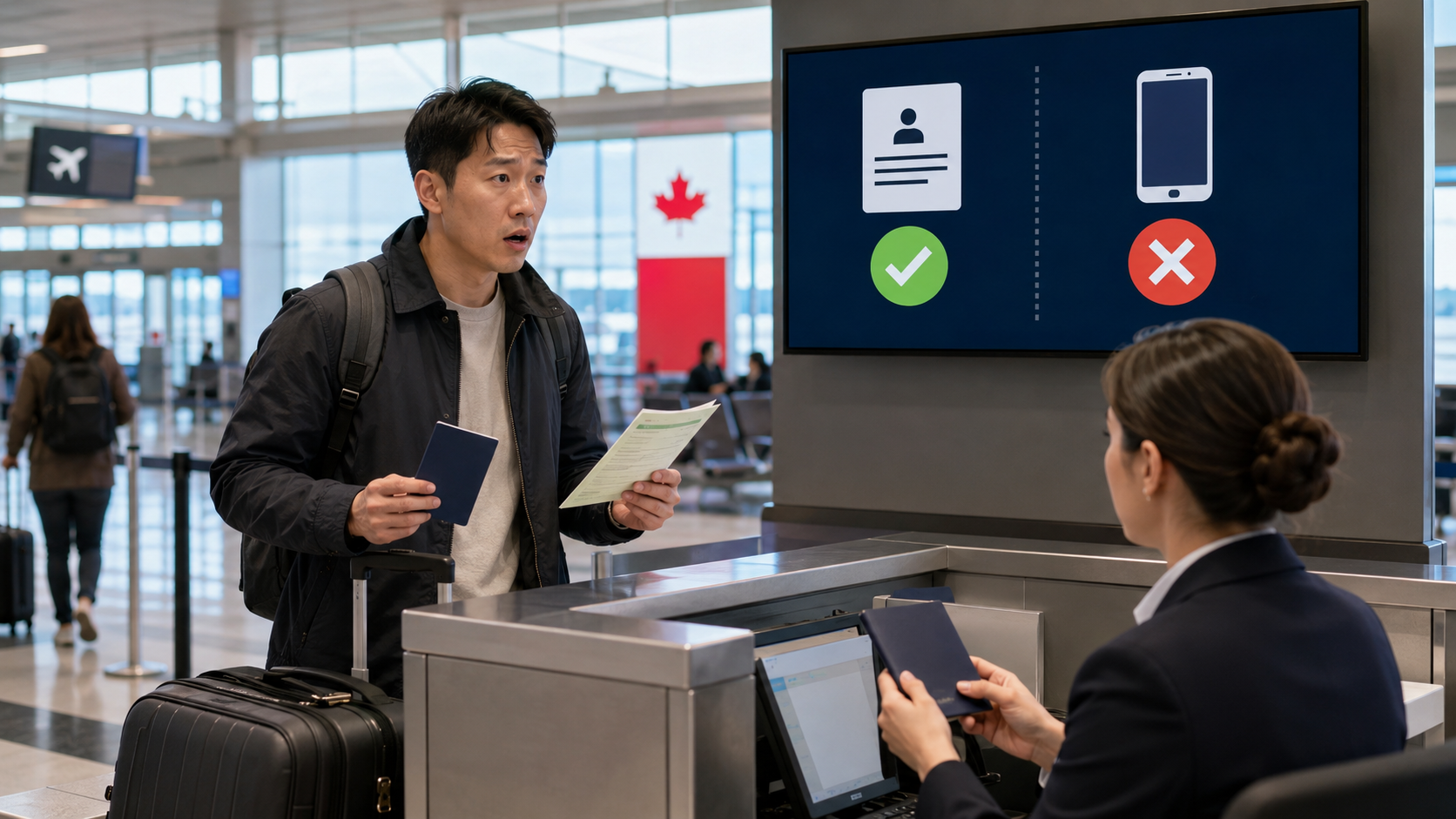
eTA가 승인됐어도 캐나다 입국이 보장되는 것은 아닙니다
먼저 답부터 말씀드리면, 캐나다 eTA가 승인되었다고 해서 실제 캐나다 입국까지 자동으로 보장되는 것은 아닙니다.
eTA는 캐나다로 항공 여행을 하기 위해 필요한 사전 여행허가이고, 실제 입국 여부는 캐나다 도착 후 국경심사 과정에서 다시 판단됩니다.
최근 상담을 하다 보면 이런 질문을 자주 받습니다.
“캐나다 eTA는 이미 승인됐는데, 예전에 미국 비자가 거절된 적이 있습니다. 그래도 캐나다 입국할 때 문제가 될 수 있나요?”
또는,
“eTA 신청할 때 과거 거절 이력도 사실대로 적었고 eTA까지 나왔는데, 이제는 그냥 들어가면 되는 것 아닌가요?”
많은 경우 실제로 별다른 문제 없이 정상적으로 입국할 수 있습니다. 과거에 미국이나 다른 나라의 비자가 거절되었다는 사실 하나만으로 캐나다 입국이 자동으로 거부되는 것은 아닙니다.
하지만 반드시 알아야 할 점이 있습니다.
eTA 승인과 캐나다 입국 허가는 서로 다른 단계입니다.
IRCC도 유효한 eTA와 여행서류를 가지고 있다고 해서 캐나다 입국이 보장되는 것은 아니라고 명확하게 안내하고 있습니다.
IRCC — eTA 승인 후 캐나다 도착 및 입국 절차
eTA는 정확히 무엇을 승인해 주는 것일까요?
eTA는 Electronic Travel Authorization의 약자입니다.
대한민국 여권과 같이 캐나다 입국비자가 면제되는 국가의 국민이 항공편으로 캐나다에 여행할 때 필요한 전자여행허가입니다.
eTA가 승인되면 해당 여권에 전자적으로 연결되고, 항공사는 탑승수속 과정에서 유효한 eTA가 있는지를 확인합니다.
하지만 여기까지는 캐나다로 여행하기 위한 사전 허가 단계입니다.
캐나다에 실제로 입국할 수 있는지는 도착 후 별도로 판단됩니다.
eTA 승인
→ 캐나다로 항공 여행을 하기 위한 사전 여행허가
캐나다 입국 허가
→ 캐나다 도착 후 실제 상황과 입국요건을 바탕으로 이루어지는 별도의 국경심사
따라서 eTA가 승인되었다는 사실은 분명 긍정적이지만, 이를 **“캐나다 입국까지 이미 승인받았다”**는 의미로 이해해서는 안 됩니다.
Secondary Inspection이 있다면 Primary Inspection도 있나요?
네. 있습니다.
캐나다 도착 후에는 먼저 일반적인 Primary Inspection, 즉 1차 또는 초기 입국심사가 이루어집니다.
주요 국제공항에서는 Primary Inspection Kiosk를 이용하는 경우도 있고, 이후 Canada Border Services Agency(CBSA)의 입국심사를 받게 됩니다.
대부분의 일반적인 여행자는 이 초기 단계에서 필요한 확인을 마치고 입국하게 됩니다.
하지만 officer가 추가적인 확인이 필요하다고 판단하면 여행자를 Secondary Inspection, 즉 2차 심사로 보낼 수 있습니다.
쉽게 정리하면 다음과 같습니다.
Primary Inspection
→ 여권, 신원, 방문 목적 등 기본적인 입국요건 확인
필요한 경우
Secondary Inspection
→ 보다 상세한 질문, 서류 확인, 기록조회, 여행계획 및 admissibility 검토
Secondary Inspection이라는 표현 때문에 심각한 문제가 생긴 사람만 가는 곳처럼 생각하기 쉽지만 반드시 그런 것은 아닙니다.
CBSA는 Secondary Inspection을 국경심사의 정상적인 절차 중 하나로 설명하고 있습니다.
CBSA — Secondary Inspection 공식 안내
왜 Secondary Inspection으로 보내질 수 있을까요?
Secondary Inspection의 이유는 다양합니다.
상황에 따라 CBSA는 다음과 같은 사항을 추가로 확인할 수 있습니다.
- 여권이나 travel document의 내용
- 캐나다 방문 목적
- 예정 체류기간
- 숙박 장소
- 여행일정
- 체류기간 동안 사용할 수 있는 자금
- 귀국 또는 onward travel 계획
- 과거 캐나다 체류 및 이민기록
- 다른 국가의 비자 또는 immigration history
- 이전 신청서에 제출된 내용과 현재 답변의 일관성
- 캐나다 입국요건을 충족하는지 여부
Secondary Inspection은 random inspection으로 이루어질 수도 있습니다.
따라서 Secondary Inspection으로 갔다는 사실 자체가 입국거절을 의미하지는 않습니다.
다만 일반적인 1차 심사보다 훨씬 구체적인 질문이나 기록 확인이 이루어질 수 있으므로, 과거 이민 또는 비자 이력이 있는 경우에는 자신의 사실관계를 정확히 알고 입국하는 것이 중요합니다.
미국 비자가 거절된 적이 있으면 캐나다 입국에 문제가 될까요?
미국 비자가 거절된 적이 있다는 사실만으로 캐나다 입국이 자동으로 거절되는 것은 아닙니다.
예를 들어 미국 F-1 학생비자를 신청했다가 거절되었다고 해서 그것만으로 캐나다 입국이 불가능해지는 것은 아닙니다.
특히 eTA 신청 과정에서 해당 거절 이력을 사실대로 disclosure했고 eTA가 승인되었다면, 적어도 그 거절 사실을 숨긴 상태에서 eTA를 받은 것은 아닙니다.
이 차이는 중요합니다.
하지만 eTA가 승인되었다고 해서 과거 이력이 없어지는 것은 아니며, 캐나다 국경에서 이에 관한 질문을 받을 가능성이 완전히 사라지는 것도 아닙니다.
예를 들어 최근 미국 학생비자를 신청했다가 거절된 후 캐나다에서 단기 학업을 계획하고 있다면 officer가 다음과 같은 내용을 확인할 수 있습니다.
- 왜 캐나다에서 공부하려는지
- 어떤 학교 또는 과정인지
- 과정 기간이 얼마나 되는지
- 캐나다에서 정확히 무엇을 할 예정인지
- 학업 종료 후 어떤 계획이 있는지
- 미국 비자 신청 당시 목적과 현재 캐나다 방문 목적은 무엇이 다른지
- 현재 설명이 과거 제출된 자료와 일치하는지
중요한 것은 미국 비자 거절 자체를 숨기거나 지나치게 두려워하는 것이 아니라, 당시의 사실관계와 현재 캐나다 방문 목적을 정확하고 일관되게 설명할 수 있는지입니다.
eTA가 나왔으면 이제 안전하다고 생각해도 될까요?
eTA가 승인된 것은 분명 긍정적인 사실입니다.
하지만 “eTA가 나왔으니 국경에서는 아무것도 확인하지 않는다”고 생각해서는 안 됩니다.
국경에서는 현재 여행자의 상황을 기준으로 다시 입국심사를 합니다.
상황에 따라 officer는 다음과 같은 질문을 할 수 있습니다.
- 캐나다에는 왜 왔습니까?
- 얼마나 머무를 예정입니까?
- 어디에서 머무릅니까?
- 캐나다에서 무엇을 할 예정입니까?
- 학교에 다닌다면 어떤 과정입니까?
- 누가 여행비와 체류비를 부담합니까?
- 귀국 또는 이후 여행계획은 무엇입니까?
- 과거 미국이나 다른 나라에서 비자가 거절된 적이 있습니까?
- 과거 캐나다 신청이나 국경에서 문제가 있었습니까?
모든 여행자에게 이러한 질문을 전부 하는 것은 아닙니다.
많은 분은 비교적 간단한 확인 후 정상적으로 입국합니다.
하지만 자신의 이력에서 질문이 나올 수 있는 부분이 있다면, 현장에서 처음 생각하기보다 출국 전에 자신의 사실관계와 관련 자료를 한 번 정리해 두는 것이 좋습니다.
입국심사에서 가장 중요한 것은 정직하게 답하는 것입니다
이 부분은 특히 중요합니다.
입국심사를 준비한다고 하면 간혹 “어떤 말을 해야 통과할 수 있나요?”라고 생각하는 경우가 있습니다.
그러나 입국심사 준비의 핵심은 officer가 좋아할 만한 문장을 만들어 외우는 것이 아닙니다.
사실대로, 질문받은 내용에 맞게, 과거에 제출한 신청서와 모순되지 않게 답하는 것이 가장 중요합니다.
그리고 정확히 기억하지 못하는 내용을 그럴듯하게 만들어 답하지 않는 것도 중요합니다.
정확한 날짜가 기억나지 않는다면 임의로 날짜를 만들어내기보다 정확히 기억나지 않는다고 설명하는 것이 낫습니다.
과거 비자 거절 이유를 정확하게 알지 못한다면 추측해서 답하기보다 가지고 있는 refusal letter나 실제 기록을 기준으로 설명하는 편이 낫습니다.
정직하다는 것은 모든 일을 완벽하게 기억해야 한다는 뜻이 아닙니다. 알고 있는 사실은 정확하게 설명하고, 정확히 모르는 것은 임의로 만들어내지 않는 것이 중요합니다.
“별일 아니라고 생각해서 No라고 했는데요”가 더 큰 문제가 될 수 있습니다
일반 신청인은 과거에 있었던 사건이 법률적으로 refusal인지, denied entry인지, order to leave에 해당하는지 정확하게 구분하지 못할 수 있습니다.
본인은 “정식 거절은 아니었던 것 같다”고 생각했을 수도 있습니다.
다른 나라의 비자가 거절된 적은 있지만 캐나다 신청서에서 묻는 refusal에 포함되는지 몰랐을 수도 있습니다.
이런 상황에서 별생각 없이 No를 선택하는 경우가 있을 수 있습니다.
그렇다고 No 한 번 잘못 선택하면 자동으로 5년 입국금지가 된다는 뜻은 아닙니다.
하지만 과거 기록과 현재 신청서의 답변 사이에 중요한 불일치가 발견되면 원래 과거 사건뿐 아니라 현재 신청에서 제출한 답변 자체가 새로운 문제가 될 수 있습니다.
캐나다 Immigration and Refugee Protection Act(IRPA) section 40은 중요한 사실을 직접 또는 간접적으로 잘못 표시하거나 숨겨 이민법 적용 과정에 오류를 유발하거나 유발할 가능성이 있는 경우 misrepresentation 문제가 발생할 수 있도록 규정하고 있습니다.
Justice Laws — IRPA section 40: Misrepresentation
그리고 material misrepresentation으로 최종 판단되는 경우에는 법에서 정한 5년의 inadmissibility 기간이 문제가 될 수 있습니다.
따라서 정확한 표현은 다음과 같습니다.
잘못된 답변 한 번 = 자동 5년 입국금지가 아닙니다.
그러나,
중요한 사실의 잘못된 진술 또는 누락 → IRCC 또는 CBSA의 문제 제기 → misrepresentation 검토 → 최종적으로 inadmissibility 판단
으로 이어질 가능성은 있기 때문에 가볍게 생각해서도 안 됩니다.
특히 “불리할 것 같으니까 일단 No라고 해야겠다”거나 “별일 아니었던 것 같으니 굳이 말하지 않아도 되겠지”라고 임의로 판단하는 것은 위험할 수 있습니다.
질문이 자신의 과거 사건에 적용되는지 잘 모르겠다면 신청서를 제출하기 전에 확인하는 것이 훨씬 안전합니다.
이미 eTA에서 거절 이력을 밝혔고 승인받았다면요?
이 경우에는 상황을 정확하게 구분해서 볼 필요가 있습니다.
과거 미국이나 다른 나라의 비자 거절 사실을 eTA 신청서에서 사실대로 disclosure했고, 그 상태에서 IRCC가 eTA를 승인했다면 신청인은 유효한 eTA를 보유하고 있는 것입니다.
따라서 불필요하게 “비자 거절이 있으니 캐나다에 들어갈 수 없을 것”이라고 단정할 필요는 없습니다.
그러나 그것이 과거 기록 자체가 삭제되었다거나 CBSA가 향후 그 사실에 관하여 질문할 수 없다는 의미는 아닙니다.
국경에서 질문을 받는다면 eTA 신청 당시 사실대로 밝혔던 내용을 갑자기 다르게 설명할 이유가 없습니다.
현재의 여행 목적과 상황까지 포함하여 정확하고 일관되게 설명하면 됩니다.
과거 거절 이력이 있다면 무엇을 준비하는 것이 좋을까요?
모든 여행자가 방대한 서류를 들고 캐나다에 입국해야 하는 것은 아닙니다.
하지만 과거 비자 거절, 입국 문제 또는 다른 immigration history가 있고 본인도 관련 질문이 나올 가능성을 걱정하고 있다면 적어도 자신의 상황은 미리 정리해 두는 것이 좋습니다.
1. 현재 캐나다 방문 목적
관광인지, 가족방문인지, 단기학업인지 등 실제 목적을 명확하게 설명할 수 있어야 합니다.
2. 예정 체류기간
언제 입국하고 언제 출국할 예정인지 실제 일정과 설명이 맞아야 합니다.
3. 체류 장소
호텔, 학교 관련 숙소, 가족 또는 지인의 집 등 실제로 어디에서 머무를 예정인지 알고 있어야 합니다.
4. 재정계획
여행비와 체류비를 누가 부담하는지 설명할 수 있어야 합니다.
5. 학업계획
단기학업이라면 학교, 프로그램의 성격, 기간과 일정 등을 알고 있는 것이 좋습니다.
6. 귀국 또는 이후 계획
캐나다 체류가 끝난 뒤 어떤 계획이 있는지 자신의 실제 상황을 설명할 수 있어야 합니다.
7. 과거 비자 거절 및 Immigration History
언제 어느 국가에서 어떤 비자를 신청했고 어떤 결과가 있었는지, 현재 가지고 있는 자료를 기준으로 확인해 두는 것이 좋습니다.
8. 기존 캐나다 신청서와의 일관성
eTA 또는 과거 캐나다 신청에서 이미 disclosure한 내용이 있다면 현장에서 설명하는 내용과 불필요하게 모순되지 않도록 자신이 제출한 기록을 이해하고 있어야 합니다.
어떤 서류를 준비할 수 있을까요?
개별 상황에 따라 다르지만 다음과 같은 자료를 고려할 수 있습니다.
- 유효한 여권
- eTA 승인 정보
- 왕복 또는 onward 항공권
- 숙소 예약자료
- 학교 등록 또는 단기학업 관련 자료
- 방문 목적을 뒷받침하는 자료
- 여행 및 체류비용 관련 자료
- 귀국 또는 이후 일정과 관련된 자료
- 필요한 경우 과거 비자 refusal letter
- 필요한 경우 과거 캐나다 visa, permit 또는 immigration documents
중요한 것은 무조건 많은 자료를 들고 가는 것이 아닙니다.
현재 설명하는 방문 목적과 실제 상황을 자연스럽게 뒷받침할 수 있는 적절한 자료를 준비하는 것이 중요합니다.
Secondary Inspection으로 가면 휴대전화도 검사하나요?
Secondary Inspection이라고 해서 모든 여행자의 휴대전화를 자동으로 검사하는 것은 아닙니다.
사건에 따라 추가 질문과 서류 확인만 이루어질 수도 있고, luggage나 다른 물품을 확인할 수도 있습니다.
CBSA는 상황에 따라 personal digital devices 역시 국경검사의 대상이 될 수 있다고 안내하고 있습니다.
그러나 Secondary Inspection = 반드시 휴대전화 검사는 아닙니다.
따라서 필요 이상으로 공포스럽게 생각할 필요는 없지만, 캐나다 국경에서 추가적인 확인이 이루어질 수 있다는 점 자체는 이해하고 있는 것이 좋습니다.
입국심사 답변을 준비한다는 것은 정답을 외우는 것이 아닙니다
입국심사 준비의 목적은 “통과할 수 있는 답변”을 암기하는 것이 아닙니다.
오히려 자신의 사실관계를 미리 검토해서 현장에서 당황하거나 긴장한 나머지 잘못된 설명을 하지 않도록 하는 것입니다.
특히 다음과 같은 상황에서는 사전 검토가 도움이 될 수 있습니다.
- 최근 미국 또는 다른 국가의 비자가 거절된 경우
- 과거 캐나다 비자 또는 Permit refusal이 있는 경우
- 과거 캐나다 국경에서 문제가 있었던 경우
- 입국 거절 또는 출국 관련 문제가 있었던 경우
- 과거 신청서를 다른 사람이 작성해 본인이 답변 내용을 정확히 기억하지 못하는 경우
- 현재 캐나다 방문 목적이 단순 관광보다 복잡한 경우
- 단기학업, 가족방문 등 여러 사정이 함께 있는 경우
- 과거 신청내용과 현재 상황을 어떻게 연결해서 설명해야 하는지 혼란스러운 경우
이럴 때는 예상 질문에 대한 멋진 문장을 외우는 것보다,
어떤 사실이 중요한지
→ 어떤 자료로 확인할 수 있는지
→ 과거 신청내용과 현재 설명이 일치하는지
→ 질문을 받았을 때 사실을 정확히 어떻게 설명할 것인지
를 미리 정리하는 것이 훨씬 중요합니다.
전문가를 통해 입국심사를 준비할 필요가 있을까요?
모든 여행자가 전문가의 도움을 받아야 하는 것은 아닙니다.
과거 이력이 단순하고 현재 여행 목적도 명확하며 본인이 자신의 사실관계를 충분히 이해하고 있다면 직접 준비해도 됩니다.
하지만 다음과 같은 상황이라면 출국 전에 자신의 전체 history와 자료를 한 번 검토해 보는 것도 도움이 될 수 있습니다.
- 과거 비자 거절이나 국경 문제가 있는데 정확한 의미를 모르겠는 경우
- eTA에는 disclosure했지만 국경에서 질문받았을 때 어떻게 설명해야 할지 부담되는 경우
- 과거 신청내용과 현재 설명이 충돌할까 걱정되는 경우
- 불리한 사실을 숨길 생각은 없지만 무엇을 어디까지 설명해야 하는지 모르겠는 경우
- 현재 방문 목적과 과거 이민기록이 복잡하게 연결되어 있는 경우
전문적인 입국심사 준비의 목적은 입국심사관을 속일 수 있는 답변을 만드는 것이 아닙니다.
오히려 자신의 실제 history와 서류를 검토하고, 어떤 부분에서 질문이 나올 수 있는지 확인하고, 질문을 받았을 때 사실을 정확하고 명확하게 설명할 수 있도록 준비하는 것입니다.
결국 가장 중요한 것은 무엇일까요?
eTA를 승인받았다면 지나치게 겁을 먹을 필요는 없습니다.
실제로 많은 여행자가 정상적인 입국심사를 거쳐 별다른 문제 없이 캐나다에 입국합니다.
미국이나 다른 국가에서 비자가 거절된 적이 있다는 사실만으로 캐나다 입국이 자동으로 거절되는 것도 아닙니다.
그러나 반대로 eTA가 있으니 무조건 입국할 수 있다고 생각해서도 안 됩니다.
캐나다에 도착하면 Primary Inspection을 받게 되고 필요한 경우 Secondary Inspection을 받을 수 있습니다.
과거 비자 거절이나 다른 immigration history가 있다면 관련 질문이 나올 가능성도 있습니다.
👉 가장 중요한 것은 특별한 말솜씨가 아니라 자신의 기록을 정확히 알고, 현재 방문 목적을 명확히 이해하며, 질문받은 내용에 사실대로 일관되게 답하는 것입니다.
과거 기록이나 신청서 답변이 복잡해서 스스로 정리하기 어렵다면 캐나다 입국 전에 자신의 전체 immigration history와 관련 자료를 검토하고 예상 가능한 질문과 답변의 방향을 미리 정리해 두는 것도 하나의 방법입니다.
그 목적은 문제를 숨기는 것이 아니라 오히려 사실을 정확하게 설명할 준비를 하는 것입니다.
In English
Approved eTA Does Not Guarantee Entry to Canada: Visa Refusals and Secondary Inspection
An approved Canadian eTA is important, but it does not automatically guarantee admission to Canada.
An eTA is a travel authorization required for eligible visa-exempt foreign nationals travelling to Canada by air. Actual admission is determined separately when the traveller arrives in Canada.
A common concern arises when a traveller already has an approved Canadian eTA but also has a previous U.S. or other foreign visa refusal.
The traveller may ask:
“My eTA was approved even though I disclosed the refusal. Does that mean there should be no issue at the Canadian border?”
In many cases, the traveller may enter Canada without any unusual difficulty.
A previous foreign visa refusal does not automatically result in refusal of admission to Canada.
However, eTA approval and admission to Canada are different decisions.
IRCC — Electronic travel authorization: After you apply
What does an approved eTA actually mean?
An eTA is electronically linked to the passport used in the application.
For eligible visa-exempt travellers flying to Canada, the airline verifies that a valid eTA is linked to the passport before boarding.
That allows the traveller to travel to Canada.
It does not itself determine whether the traveller will be admitted after arrival.
eTA approval
→ authorization required for eligible air travel to Canada
Admission to Canada
→ a separate determination made at the Canadian port of entry
Is there a Primary Inspection before Secondary Inspection?
Yes.
The initial stage of the Canadian border process is generally referred to as Primary Inspection.
At major Canadian airports, travellers may use Primary Inspection Kiosks as part of the arrival process.
For many travellers, the required examination is completed at the initial stage.
Where additional verification is required, CBSA may refer the traveller to Secondary Inspection.
The practical sequence can therefore be understood as:
Primary Inspection
→ initial identity, document and entry review
If necessary:
Secondary Inspection
→ more detailed questioning, document verification, record checks and admissibility review
Secondary Inspection is not automatically a sign that the traveller will be refused admission.
CBSA describes secondary inspection as a normal part of the Canadian border process.
CBSA — Canadian customs: Secondary inspections
Why can a traveller be referred to Secondary Inspection?
There are many possible reasons.
Depending on the circumstances, officers may verify:
- travel documents
- purpose of the Canadian visit
- expected length of stay
- accommodation
- travel plans
- available funds
- return or onward travel
- previous Canadian immigration history
- foreign visa or immigration history
- consistency between previous applications and current answers
- admissibility to Canada
Secondary Inspection may also occur as part of a random inspection.
A secondary referral therefore does not by itself mean that refusal of entry is imminent.
However, it may involve more detailed examination than the initial border process.
What if the traveller previously had a U.S. visa refused?
A previous U.S. visa refusal does not automatically make the person inadmissible to Canada.
If the refusal was disclosed where required in the eTA application and the eTA was subsequently approved, that is an important fact.
However, approval of an eTA does not erase previous immigration history.
Depending on the circumstances of the current trip, a CBSA officer may still ask questions concerning the traveller's previous visa history or current Canadian travel plans.
For example, where someone recently applied for a U.S. student visa, was refused and is now entering Canada for short-term studies, questions may arise concerning:
- the Canadian program
- length of study
- purpose of studying in Canada
- activities planned in Canada
- plans after completing the program
- the relationship between the previous U.S. application and the current Canadian trip
The important question is not how to make the previous refusal disappear.
It is whether the traveller understands the history and can explain the current Canadian trip truthfully and consistently.
Truthful answers are more important than “perfect answers”
This is one of the most important principles of border preparation.
Preparation should never mean creating answers designed to conceal inconvenient facts.
The traveller should answer:
truthfully, directly, consistently and within the limits of what the traveller actually knows.
If an exact date is not remembered, the traveller should not invent one.
If the reason for a previous refusal is not fully understood, the traveller should avoid creating an explanation unsupported by the actual refusal record.
Being truthful does not require perfect memory.
It requires distinguishing what is actually known from what remains uncertain.
Why can an incorrect “No” answer become much more serious?
Applicants do not always understand how Canadian immigration questions apply to previous events.
A person may not understand that an earlier border incident could fall within a particular question.
A foreign visa refusal may also be misunderstood.
An incorrect answer does not automatically create a five-year inadmissibility period.
However, an inconsistency between an applicant's immigration history and information submitted to Canadian authorities can lead to a separate concern about misrepresentation.
Section 40 of Canada's Immigration and Refugee Protection Act addresses material misrepresentation or withholding of material facts that induces or could induce an error in the administration of the Act.
Justice Laws — Immigration and Refugee Protection Act, section 40
Where inadmissibility for misrepresentation is ultimately determined, the legislation provides for a five-year inadmissibility period in the circumstances set out in the Act.
The distinction is important:
One incorrect click does not automatically equal a five-year ban.
But a traveller should not omit potentially relevant immigration history simply because it appears minor or inconvenient.
If there is genuine uncertainty about how a previous event should be disclosed, it is better to clarify the issue before submitting the application.
What should a traveller with previous immigration history prepare?
There is no universal document package required for every traveller.
However, where there is previous immigration history that may reasonably lead to questions, the traveller may wish to review:
Current purpose of travel
The traveller should understand whether the trip is for tourism, a family visit, short-term study or another legitimate purpose.
Length of stay
The planned arrival and departure dates should be consistent with the actual trip.
Accommodation
The traveller should know where they will be staying.
Financial arrangements
The traveller should understand who is paying for the trip and how the stay will be funded.
Study plans
Where the traveller is entering for short-term study, the school, program, duration and schedule should be understood.
Return or onward plans
The traveller should be able to explain the actual plan following the Canadian stay.
Previous visa refusals and immigration history
The traveller should review available records and understand what occurred in previous applications.
Consistency with previous Canadian applications
Where immigration history was previously disclosed in an eTA or another Canadian application, the traveller should understand what was submitted and avoid unnecessary inconsistencies.
What documents may be useful?
Depending on the circumstances, relevant documents may include:
- valid passport
- eTA approval information
- return or onward flight information
- accommodation records
- school or short-term study documents
- documents supporting the stated purpose of travel
- appropriate financial evidence
- documents relating to plans after the Canadian visit
- previous visa refusal documents where relevant
- previous Canadian immigration documents where relevant
More documents do not necessarily mean better preparation.
The documents should support the traveller's actual purpose and circumstances.
Does Secondary Inspection always involve a phone search?
No.
Secondary Inspection does not automatically mean that a traveller's mobile phone will be examined.
Depending on the circumstances, CBSA may conduct more detailed questioning, document review or examination of goods.
Personal digital devices can be examined in certain border circumstances, but they are not automatically examined simply because a traveller was referred to Secondary Inspection.
Should a traveller prepare answers in advance?
Preparation should not mean memorizing artificial answers.
The purpose is to review the traveller's history and plans before arrival so that nervousness or confusion does not lead to inaccurate explanations.
Preparation may be particularly useful where there has been:
- a recent foreign visa refusal
- a previous Canadian visa or permit refusal
- a prior Canadian border issue
- a previous denied-entry or departure-related incident
- uncertainty about information submitted in an earlier application
- a complicated current purpose of travel
- short-term studies combined with other immigration or family circumstances
The better approach is to identify:
what facts matter
→ what documents support those facts
→ whether current explanations are consistent with previous records
→ how to answer questions accurately if they arise
Is professional border preparation necessary?
Not every traveller needs professional assistance.
Where the history is simple and the traveller clearly understands the facts, independent preparation may be sufficient.
However, professional review may be useful where previous visa refusals, border issues or immigration records are complex and the traveller is unsure how those facts should be explained.
The purpose of professional preparation should never be to manufacture a story designed to obtain entry.
It should be to review the traveller's actual history, identify potential areas of questioning, organize relevant evidence and help the traveller understand how to answer truthfully and clearly.
The practical takeaway
An approved eTA is a positive and important step.
Many travellers with previous foreign visa refusals enter Canada without serious difficulty.
A previous U.S. or other visa refusal does not automatically result in refusal of admission to Canada.
At the same time, an approved eTA is not a guarantee of admission.
A traveller will still undergo Primary Inspection after arrival and may, where additional examination is required, be referred to Secondary Inspection.
For travellers with previous visa refusals or other immigration history, the most important preparation is not finding the perfect sentence that will guarantee entry.
It is understanding the record, preparing appropriate documents and answering questions truthfully, accurately and consistently.
Where the history is complicated enough that the traveller is genuinely unsure what previous records mean or how they relate to the current Canadian trip, reviewing the history before departure can reduce confusion and help the traveller approach the border examination with a clear understanding of the facts.