
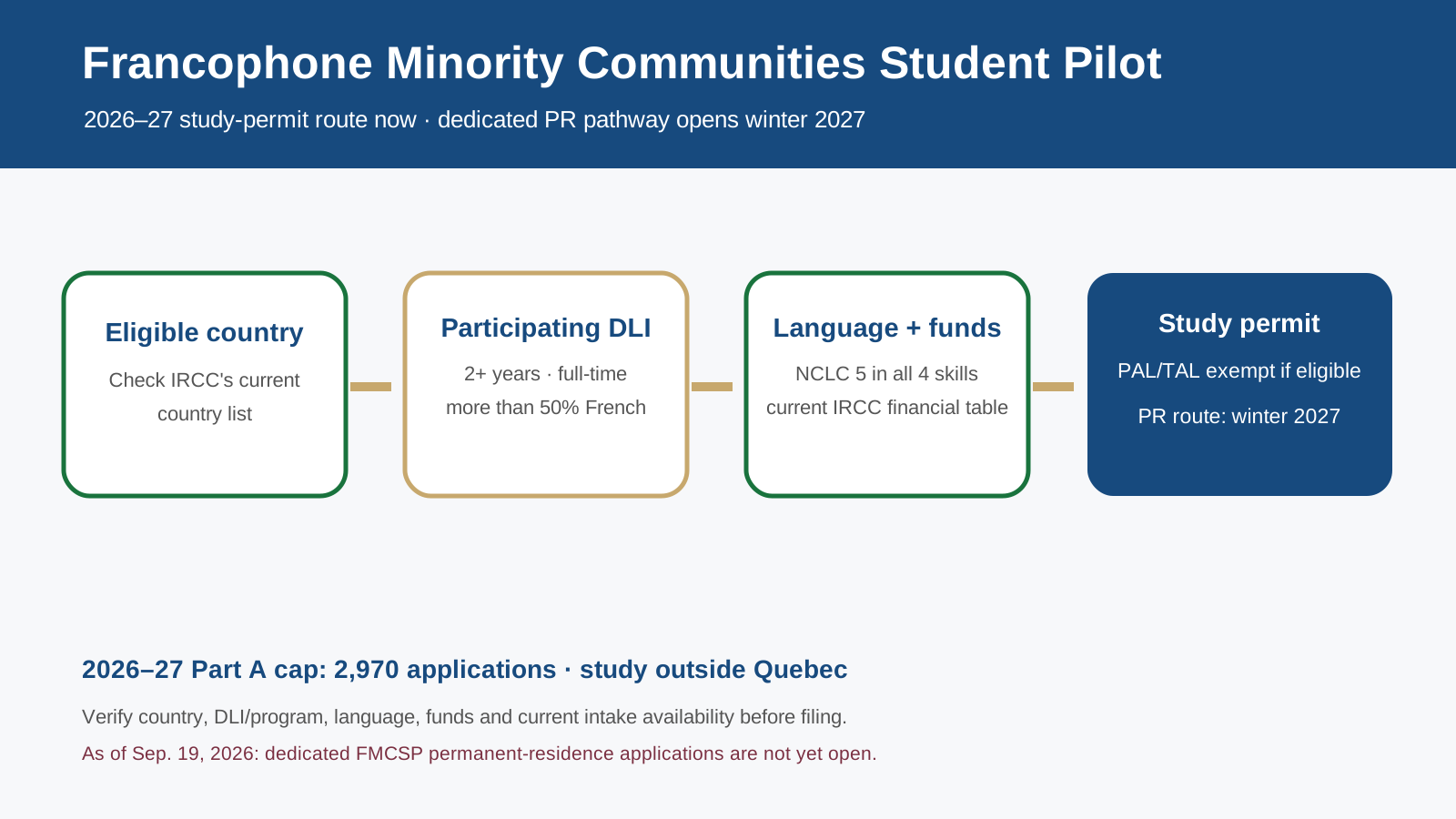
캐나다의 **Francophone Minority Communities Student Pilot(FMCSP)**은 Quebec 밖의 프랑스어권 또는 이중언어권 대학·컬리지에서 공부하려는 일정한 국가의 프랑스어권 학생을 위한 특별 파일럿입니다. IRCC는 2026년 공공정책을 갱신하면서 신규 Study Permit 신청에 관한 Part A를 2027년 8월 25일까지 연장했고, 2026년 8월 26일부터 2027년 8월 25일까지는 최대 2,970건의 Part A 신청을 접수하도록 정했습니다.
다만 이 프로그램을 “프랑스어를 하면 학생비자가 쉬워지고 졸업 즉시 영주권을 신청할 수 있는 제도”라고 단순화하면 정확하지 않습니다. 신청인의 국적, 참여학교 여부, 프로그램 길이와 수업언어, 프랑스어 점수, 재정요건을 모두 충족해야 하며, 졸업 후 전용 영주권 경로도 별도의 요건과 접수시점이 있습니다.
2026년 9월 19일 기준 핵심: FMCSP Study Permit은 현재 신청 가능한 제도이지만, 졸업생을 위한 전용 permanent residence pathway는 아직 접수를 시작하지 않았고 IRCC는 2027년 겨울 개시 예정이라고 안내하고 있습니다. 현재 학생비자 단계와 미래의 PR 단계를 구분해 계획해야 합니다.
누가 FMCSP Study Permit을 신청할 수 있나요?
Part A 신규 Study Permit 신청인은 IRCC가 정한 대상국의 시민이어야 합니다. 이 파일럿은 Organisation internationale de la Francophonie 회원국 가운데 역사적으로 캐나다 학생비자 승인률이 낮았던 일부 지역의 국가를 대상으로 설계되었습니다. 공식 목록에는 아프리카의 여러 국가와 Middle East의 Egypt·Lebanon, Americas의 Haiti·Dominica·Saint Lucia 등이 포함됩니다.
프랑스어를 잘한다는 사실만으로 국적 요건을 대신할 수는 없습니다. 반대로 대상국 시민이라도 언어·학교·프로그램·재정요건을 갖추지 못하면 파일럿 요건을 충족하지 못합니다. 신청 직전에는 IRCC의 최신 대상국 목록을 확인해야 합니다.
아무 프랑스어 학교나 가능한가요?
아닙니다. Letter of Acceptance는 **FMCSP 참여를 위해 IRCC와 관련 협약을 맺은 participating designated learning institution(DLI)**에서 발급된 것이어야 합니다. 같은 학교 안에서도 모든 과정이 자동으로 대상이 되는 것은 아닙니다.
신규 신청의 qualifying program은 핵심적으로 다음 기준을 확인해야 합니다.
- postsecondary level 과정일 것
- full-time으로 최소 2년 이상일 것
- diploma 또는 degree로 이어질 것
- 전체 수업의 50%를 초과하는 부분이 프랑스어로 진행될 것
- 학교가 현재 FMCSP participating DLI일 것
- LOA가 신청인의 FMCSP 참여를 적절히 나타낼 것
학교 이름만 보고 판단하지 말고 실제 캠퍼스와 프로그램이 현재 목록에 포함되는지 확인하는 것이 중요합니다.
프랑스어 점수는 어느 정도 필요하나요?
Part A 신청인은 IRCC가 인정하는 일반 프랑스어 능력시험 결과로 speaking, listening, reading, writing 네 영역 모두 NCLC 5 이상을 입증해야 합니다. IRCC의 현재 안내에는 TEF Canada와 TCF Canada가 사용 가능한 시험으로 제시되어 있습니다.
네 영역 중 하나가 기준에 미달하면 다른 영역 평균이 높더라도 요건을 충족한다고 단정할 수 없습니다. 시험 종류, 결과 유효성, 제출 방식은 실제 신청 시점의 IRCC 체크리스트를 다시 확인해야 합니다.
PAL 또는 TAL이 필요한가요?
FMCSP를 통해 Study Permit을 신청하는 적격 신청인은 provincial attestation letter(PAL) 또는 territorial attestation letter(TAL)가 필요하지 않습니다. 이는 일반 Study Permit 체계와 구분되는 중요한 부분입니다.
다만 PAL/TAL이 면제된다는 것이 Study Permit의 다른 요건까지 면제된다는 뜻은 아닙니다. LOA, 프로그램 적격성, 언어, 재정, admissibility, 필요시 medical exam 등 나머지 요건은 별도로 충족해야 합니다.
재정요건은 어떻게 계산하나요?
FMCSP는 학비와 교통비 외에도 신청인과 동반 가족의 생활비를 입증하도록 합니다. 필요한 생활비는 참여 DLI의 main campus가 위치한 지역의 규모와 가족 수에 따라 달라집니다. IRCC는 지역을 여러 그룹으로 나누어 금액표를 게시하고 있으며, 2026년 9월 1일 이후 신청에 적용되는 금액도 별도로 업데이트했습니다.
따라서 과거 블로그나 오래된 금액표를 그대로 사용하는 것은 위험합니다. 실제 신청일에 IRCC의 participating DLI and financial requirements 표에서 학교가 어느 그룹에 속하는지, 가족 수 기준 금액이 얼마인지 확인해야 합니다.
재정계획에는 보통 다음을 함께 봅니다.
- 첫해 학비
- 신청인과 동반 가족의 생활비
- 캐나다 왕복 또는 이동에 필요한 교통비
- 자금의 실제 사용가능성과 출처를 보여줄 수 있는 증빙
단순히 계좌잔액 한 줄만 맞추는 것보다 자금의 출처와 지속가능성이 신청서 전체 설명과 일치하는지가 중요합니다.
2026–27 신청 한도 2,970건은 무엇을 뜻하나요?
IRCC의 2026 공공정책은 Part A 신규 Study Permit 신청에 다음 processing cap을 두고 있습니다.
- 2025년 8월 26일–2026년 8월 25일: 최대 2,970건
- 2026년 8월 26일–2027년 8월 25일: 최대 2,970건
해당 연도의 cap을 넘는 Part A 신청은 processing 대상으로 받아들여지지 않고 반환될 수 있습니다. 따라서 참여학교의 LOA를 받았다고 해서 FMCSP 접수공간까지 보장되는 것은 아닙니다.
학교 입학일정만 볼 것이 아니라 실제 IRCC 접수 가능상태도 신청 직전 다시 확인하는 것이 안전합니다.
배우자와 자녀는 어떻게 되나요?
FMCSP 공공정책에는 주신청인의 일정한 가족구성원에 대한 temporary resident facilitation도 포함되어 있습니다. 상황에 따라 가족은 visitor, study permit, work permit, extension 또는 restoration과 관련된 절차를 검토할 수 있습니다.
하지만 “FMCSP 학생의 배우자라면 자동으로 오픈 워크퍼밋을 받는다”는 식으로 단정해서는 안 됩니다. 가족관계, 주신청인의 실제 FMCSP 자격 및 허가상태, 신청하는 문서 종류, 개별 admissibility와 현재 적용되는 배우자 워크퍼밋 규정을 함께 봐야 합니다.
졸업하면 바로 영주권을 신청할 수 있나요?
현재는 아닙니다. IRCC의 FMCSP 전용 PR 안내 페이지는 2026년 9월 19일 현재 상태를 **“Opening winter 2027”**로 표시하고 있습니다. 즉, 영주권 경로의 법적·정책적 틀은 발표되어 있지만 현재 당장 PR 신청서를 접수할 수 있다는 의미는 아닙니다.
IRCC가 현재 안내하는 향후 핵심 자격구조에는 다음 사항이 포함됩니다.
- Canada 안, Quebec 밖에 거주하고 계속 Quebec 밖에 거주할 의도가 있을 것
- FMCSP 아래에서 발급된 Study Permit을 보유했을 것
- 참여 DLI의 qualifying program을 성공적으로 마쳤을 것
- 최소 2년 full-time 과정일 것
- 수업의 50% 초과가 프랑스어였을 것
- degree 또는 diploma 등 요구되는 교육자격을 갖출 것
- 신청 시 유효한 temporary resident status를 유지할 것
- 그 밖의 admissibility 및 제출요건을 충족할 것
실제 접수양식, 세부 서류, 제출방식은 경로가 열릴 때 IRCC의 최신 지침을 기준으로 확인해야 합니다.
졸업 후 PR 심사 중 일할 수 있는 경로는 있나요?
IRCC는 FMCSP 졸업생이 향후 전용 PR 신청을 접수한 뒤 일정 요건을 충족하면 open work permit을 신청할 수 있는 구조를 안내하고 있습니다. 그러나 이 역시 PR pathway가 실제 개시되고 신청인이 PR을 접수한 이후에 의미가 있는 단계입니다.
따라서 2026년 현재 재학생이나 입학예정자가 “지금 PR을 먼저 넣고 오픈 워크퍼밋을 받는다”고 이해해서는 안 됩니다. 현재 단계에서는 Study Permit 자격과 학업계획을 정확히 준비하고, 졸업 시점에 적용되는 PR·work permit 지침을 다시 확인하는 것이 맞습니다.
신청 전에 확인할 실무 체크리스트
- 국적이 현재 IRCC FMCSP 대상국 목록에 포함되는가
- 학교와 캠퍼스가 현재 participating DLI인가
- 프로그램이 최소 2년 full-time인가
- 과정이 diploma 또는 degree로 이어지는가
- 수업의 50% 초과가 프랑스어인가
- NCLC 5를 네 영역 모두 충족하는가
- LOA가 FMCSP 신청에 맞게 발급되었는가
- PAL/TAL 면제 근거를 신청서에서 적절히 반영했는가
- 2026–27 Part A cap이 접수 가능한 상태인가
- 최신 지역·가족수 기준 재정요건을 충족하는가
- 동반가족이 있다면 각자의 신청자격을 별도로 검토했는가
- 졸업 후 PR 경로가 현재는 2027년 겨울 개시 예정이라는 점을 전제로 장기계획을 세웠는가
공식 자료
- IRCC, Updated FMCSP Study Permit public policy: https://www.canada.ca/en/immigration-refugees-citizenship/corporate/mandate/policies-operational-instructions-agreements/public-policies/study-permit-franco-minority-communities-student-pilot-2026.html
- IRCC, FMCSP main page: https://www.canada.ca/en/immigration-refugees-citizenship/services/study-canada/study-permit/fmc-student-pilot.html
- IRCC, Participating DLIs and financial requirements: https://www.canada.ca/en/immigration-refugees-citizenship/services/study-canada/study-permit/fmc-student-pilot/eligibility/participating-dlis.html
- IRCC, Get the right documents: https://www.canada.ca/en/immigration-refugees-citizenship/services/study-canada/study-permit/fmc-student-pilot/get-documents.html
- IRCC, Immigrate as a Francophone student: https://www.canada.ca/en/immigration-refugees-citizenship/services/study-canada/study-permit/fmc-student-pilot/path-to-pr.html
FMCSP는 Study Permit 단계부터 Quebec 밖의 프랑스어권 커뮤니티 정착까지 연결해 설계된 특별 파일럿입니다. 다만 현재 신청 가능한 것은 Study Permit 단계이며, 졸업 후 전용 PR 접수는 2027년 겨울 개시 예정입니다. 입학과 장기 이민계획을 함께 보되 각 단계의 실제 개시상태와 최신 요건을 분리해서 확인해야 합니다.
English Version
The Francophone Minority Communities Student Pilot (FMCSP) is a targeted Canadian program for eligible French-speaking international students who plan to study at participating postsecondary institutions outside Quebec. In 2026, IRCC updated the temporary public policy and extended the new study-permit component, Part A, through August 25, 2027.
For the intake year running from August 26, 2026 to August 25, 2027, IRCC will accept a maximum of 2,970 Part A study-permit applications for processing.
The pilot should not be understood as a blanket rule that makes every French-speaking applicant eligible or that allows graduates to apply for permanent residence immediately. Nationality, institution, program structure, French-language ability, finances and other immigration requirements all matter.
Current status as of September 19, 2026: eligible applicants can apply for the FMCSP study-permit stream now, but the dedicated permanent-residence pathway for graduates is not yet accepting applications. IRCC currently lists that PR pathway as opening in winter 2027.
Who can apply for the FMCSP study permit?
Part A is limited to citizens of specified countries. The pilot was designed for French-speaking applicants from selected Organisation internationale de la Francophonie member countries in regions that historically experienced lower Canadian study-permit approval rates. The official country list includes a number of countries in Africa, Egypt and Lebanon in the Middle East, and Haiti, Dominica and Saint Lucia in the Americas.
French-language ability does not replace the nationality requirement. Likewise, nationality alone is not enough: applicants must also satisfy the institution, program, language, financial and admissibility requirements.
Does any French-language school qualify?
No. The letter of acceptance must come from a participating designated learning institution that is part of the FMCSP framework. Applicants should also confirm that the specific program qualifies rather than relying only on the name of the school.
A qualifying new-study program generally must be:
- postsecondary
- full-time
- at least two years in length
- leading to a diploma or degree
- taught more than 50% in French
- offered through a participating FMCSP DLI
The institution and program should be checked against IRCC's current participating-DLI information immediately before filing.
What French level is required?
Part A applicants must provide an accepted general French-language test showing at least NCLC 5 in each of speaking, listening, reading and writing. IRCC's current document guidance identifies TEF Canada and TCF Canada as accepted tests for this purpose.
A strong overall score does not compensate for a result below the required level in one of the four abilities. Applicants should also verify the validity and submission requirements of their test results when they apply.
Is a PAL or TAL required?
Eligible FMCSP study-permit applicants do not need a provincial attestation letter or territorial attestation letter for an application through the pilot.
This exemption does not remove the other study-permit requirements. Applicants still need to satisfy the relevant letter-of-acceptance, program, language, financial, admissibility and document requirements, including a medical examination when applicable.
How do the financial requirements work?
FMCSP applicants must demonstrate sufficient funds for tuition, transportation and living expenses for themselves and accompanying family members. The living-expense amount depends on the population group of the municipality where the participating DLI's main campus is located and on family size.
IRCC updates the amounts. A new table applies to applications made on or after September 1, 2026, so applicants should not rely on an older blog post or a previous year's dollar figure. The current participating-DLI and financial-requirements page should be checked immediately before submission.
A practical financial review should account for first-year tuition, required living expenses, transportation and credible evidence showing that the funds are genuinely available and consistent with the applicant's overall circumstances.
What does the 2,970-application cap mean?
The updated public policy sets the following maximum numbers of Part A applications that may be accepted for processing:
- August 26, 2025 to August 25, 2026: 2,970
- August 26, 2026 to August 25, 2027: 2,970
Applications received above the applicable annual cap may be returned rather than accepted for processing. An admission letter from a participating DLI therefore does not itself guarantee that space remains under the FMCSP processing cap.
Can a spouse or child accompany the student?
The public-policy framework also contains facilitation for certain accompanying family members. Depending on the facts, a spouse, common-law partner or dependent child may need a visitor visa, study permit, work permit, extension or restoration application.
It would be inaccurate to assume that every spouse of an FMCSP student automatically receives an open work permit. The family relationship, the principal applicant's actual FMCSP status, the type of application and the rules in force at the time all need to be reviewed.
Can a graduate apply for permanent residence now?
Not yet. IRCC's dedicated FMCSP permanent-residence page currently shows the status “Opening winter 2027.” The government has published the framework for the pathway, but as of September 19, 2026 it should not be described as a stream that is already accepting graduate PR applications.
IRCC's current guidance indicates that the future eligibility structure will require, among other things, that the applicant:
- reside in Canada outside Quebec and intend to remain outside Quebec
- have a study permit issued under the FMCSP
- successfully complete a qualifying program at a participating DLI
- complete at least two years of full-time study
- have more than 50% of the program taught in French
- receive the required degree or diploma
- hold valid temporary resident status when applying
- meet all other applicable admissibility and documentary requirements
Applicants should wait for the pathway to open and then follow the final application forms, document list and filing instructions published by IRCC.
Will graduates be able to work while a PR application is pending?
IRCC has announced a related open-work-permit mechanism for qualifying FMCSP graduates who have applied for permanent residence. This is a later-stage option: it becomes relevant after the permanent-residence pathway opens and after an eligible graduate has actually submitted the required PR application.
A current student or prospective student should therefore not assume that they can file for PR or obtain the graduate open work permit in 2026. The immediate task is to qualify for and maintain the study-permit pathway, complete the eligible program, and re-check the PR and work-permit rules when the graduate stream opens.
Practical pre-application checklist
Before filing, verify:
- your citizenship is on the current FMCSP country list
- the school and campus are currently participating
- the program is full-time and at least two years long
- the program leads to a diploma or degree
- more than 50% of instruction is in French
- you have NCLC 5 or higher in all four French abilities
- the letter of acceptance is appropriate for an FMCSP application
- the PAL/TAL exemption is properly documented
- the applicable Part A cap is still open
- you meet the latest location- and family-size-based financial requirement
- each accompanying family member has the correct immigration strategy
- your long-term plan reflects the fact that the dedicated PR pathway is scheduled to open in winter 2027, rather than assuming it is already open
Official sources
- IRCC updated FMCSP Study Permit public policy: https://www.canada.ca/en/immigration-refugees-citizenship/corporate/mandate/policies-operational-instructions-agreements/public-policies/study-permit-franco-minority-communities-student-pilot-2026.html
- IRCC FMCSP main page: https://www.canada.ca/en/immigration-refugees-citizenship/services/study-canada/study-permit/fmc-student-pilot.html
- IRCC participating DLIs and financial requirements: https://www.canada.ca/en/immigration-refugees-citizenship/services/study-canada/study-permit/fmc-student-pilot/eligibility/participating-dlis.html
- IRCC documents page: https://www.canada.ca/en/immigration-refugees-citizenship/services/study-canada/study-permit/fmc-student-pilot/get-documents.html
- IRCC permanent-residence pathway page: https://www.canada.ca/en/immigration-refugees-citizenship/services/study-canada/study-permit/fmc-student-pilot/path-to-pr.html
The FMCSP is designed to connect eligible French-language study outside Quebec with longer-term settlement in Francophone minority communities. For planning purposes, however, the current study-permit stream and the future graduate permanent-residence stream must be treated as separate stages with separate opening dates and eligibility requirements.