
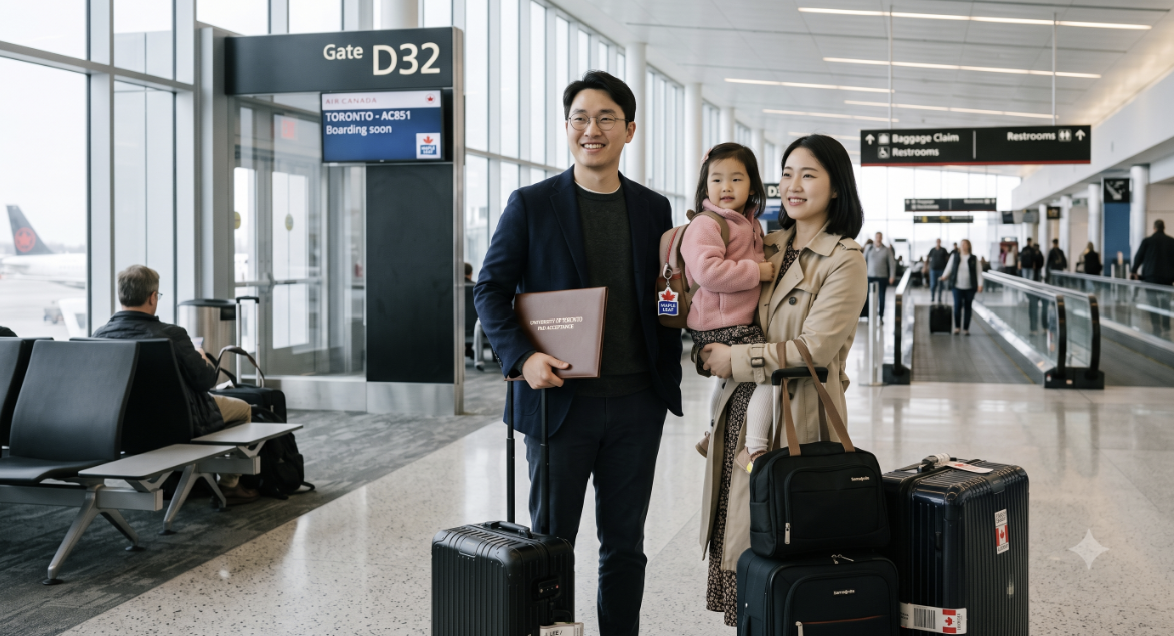
캐나다 박사과정 입학허가서를 받은 분이라면 2026년에는 일반 학생비자 신청과 별도로 반드시 확인할 제도가 있습니다.
IRCC는 박사과정(doctoral/PhD) 학생과 일정한 동반가족의 신청을 더 빠르게 처리하는 절차를 운영하고 있습니다. 요건을 충족하면, 신청서의 완전성 확인과 생체정보 제출, 그리고 학교의 입학허가서(LOA) 확인이 끝난 뒤 약 2주 내 처리를 목표로 합니다.
다만 “PhD 합격자라면 무조건 14일 안에 비자가 나온다”는 뜻은 아닙니다!
신청 장소, 신청 방식, 서류 완전성, 생체정보 제출 시기, 학교의 LOA 확인, 의료·보안 심사 필요 여부에 따라 신속처리 적용 여부와 실제 처리기간이 달라질 수 있습니다.
IRCC 공식 안내는 Doctoral degree students: Get faster processing에서 확인할 수 있습니다.
누가 박사과정 학생비자 신속처리 대상인가요?
IRCC의 현재 안내에 따르면 기본적으로 다음 세 가지를 모두 충족해야 합니다.
- 캐나다의 박사학위(doctoral degree) 프로그램에 등록하려는 학생일 것
- 캐나다 밖에서 학생비자를 신청할 것
- 학생비자를 온라인으로 신청할 것
따라서 석사과정, 학부과정, 대학원 디플로마 또는 수료증 과정은 이 박사과정 신속처리의 대상이 아닙니다.
또한 캐나다 안에서 학생비자를 신청하는 경우에도 이 신속처리 절차가 적용되지 않습니다.
캐나다의 대학원 과정 학생비자 전체 절차는 IRCC Graduate Student Study Permit 안내에서 확인할 수 있습니다.
“2주 처리”는 언제부터 계산되나요?
가장 중요한 부분입니다.
IRCC는 단순히 온라인 신청 버튼을 누른 날부터 무조건 14일을 계산한다고 안내하지 않습니다.
신속처리를 위한 처리는 다음 단계가 갖춰진 후 진행됩니다.
- 신청서가 **완전한 신청(complete application)**인지 IRCC가 확인
- 필요한 경우 신청자가 **생체정보(biometrics)**를 제출
- 캐나다 지정교육기관(DLI)이 해당 학생의 입학허가서(LOA)가 유효하다고 확인
IRCC는 DLI가 LOA를 확인하는 데 최대 **10일(calendar days)**이 걸릴 수 있다고 안내하고 있습니다.
이 확인이 끝난 뒤 IRCC는 해당 신청을 2주 안에 처리하는 것을 목표로 합니다.
따라서 출국일정을 잡을 때 “온라인 신청일 + 14일 = 승인일”처럼 단순 계산하는 것은 위험합니다.
서류가 빠지면 신속처리를 받기 어렵습니다
박사과정 신속처리에서 가장 강조되는 조건 중 하나가 완전한 신청서입니다.
IRCC는 신청 시 다음을 모두 갖추도록 안내하고 있습니다.
- 해당 신청에 필요한 모든 양식
- 체크리스트에 요구되는 서류
- 필요한 수수료 납부
- 필요한 경우 생체정보 수수료
- 영어 또는 프랑스어가 아닌 서류의 인증번역
서류가 빠져 추가요청이 발생하면 신속처리 대상에서 벗어나거나 처리가 지연될 수 있습니다.
특히 한국에서 발급된 가족관계서류, 경력자료, 재정자료 등은 영문 또는 불문이 아니라면 적절한 번역 준비가 중요합니다.
생체정보 요청서를 받았다면 2주 안에 제출해야 합니다
생체정보가 필요한 신청자는 Biometrics Instruction Letter, 즉 BIL을 받은 뒤 2주 이내에 생체정보를 제공해야 신속처리의 이점을 유지할 수 있습니다.
과거에 제출한 생체정보가 아직 유효하다면 다시 제출할 필요가 없을 수 있습니다.
다만 생체정보 유효기간이 곧 끝나는 경우에는 새 비자나 허가서의 유효기간과 연동될 수 있으므로, 신청 단계에서 유효기간을 함께 확인하는 편이 좋습니다.
생체정보 제출이 늦어지면 IRCC가 목표로 하는 빠른 처리 일정도 늦어질 수 있습니다.
배우자와 자녀도 함께 빨리 처리될 수 있습니다
이번 제도의 실무적 장점은 학생 본인만의 처리기간에 국한되지 않는다는 점입니다.
박사과정 학생과 함께 캐나다로 가는 적격 가족은 다음 신청에 대해 신속처리 대상이 될 수 있습니다.
- 배우자 또는 사실혼 파트너의 방문비자 또는 워크퍼밋
- 동반 자녀의 방문비자 또는 학생비자
- 기타 요건을 충족하는 동반가족의 관련 임시체류 신청
적격 가족에는 일반적으로 다음이 포함됩니다.
- 배우자 또는 common-law partner
- 신청자 또는 배우자·사실혼 파트너의 dependent child
- dependent child의 dependent child
하지만 중요한 조건이 있습니다.
가족 신청을 박사과정 학생의 학생비자 신청에 포함하고, 같은 시점에 함께 제출해야 합니다.
학생비자를 먼저 제출한 뒤 배우자나 자녀가 나중에 별도로 신청하면 같은 신속처리 혜택을 받지 못할 수 있습니다.
배우자 워크퍼밋은 ‘같이 신청하면 무조건 승인’이 아닙니다
가족 신청이 신속처리될 수 있다는 것과 배우자의 워크퍼밋 자격이 자동으로 인정된다는 것은 다른 문제입니다.
배우자가 오픈 워크퍼밋을 신청하려면 신청 시점의 배우자 워크퍼밋 자격요건도 별도로 충족해야 합니다.
즉, “박사과정 학생의 배우자”라는 가족관계와 “신속처리 가능” 여부는 하나의 요소이고, 실제 워크퍼밋 발급은 해당 워크퍼밋의 법적·정책적 자격요건에 따라 판단됩니다.
따라서 동반가족 신청을 준비할 때는 학생비자, 배우자 워크퍼밋, 자녀 학생비자를 각각 따로 보지 말고 가족 전체의 신청구조를 먼저 설계하는 것이 좋습니다.
공립대 석·박사 과정의 PAL/TAL 면제와는 별개의 제도입니다
2026년 1월 1일부터 캐나다의 일정한 공립 교육기관(public institution)의 학위수여 석사·박사 과정에 진학하는 학생은 학생비자 신청 시 Provincial Attestation Letter(PAL) 또는 Territorial Attestation Letter(TAL)를 제출하지 않아도 되는 경우가 있습니다.
이 조치는 박사과정 2주 신속처리와 관련은 있지만 서로 같은 제도는 아닙니다.
- PAL/TAL 면제: 특정 대학원 학위과정 학생의 서류요건 완화
- PhD 신속처리: 요건을 갖춘 박사과정 학생과 가족의 신청을 더 빠르게 처리하는 절차
따라서 “박사과정이니까 PAL도 무조건 필요 없고 2주 안에 비자도 무조건 나온다”고 한 번에 판단해서는 안 됩니다.
학교가 public institution인지, 과정이 실제 degree-granting doctoral program인지, 퀘벡의 별도 요건이 적용되는지 등을 함께 확인해야 합니다.
복잡한 신청은 2주 목표에서 벗어날 수 있습니다
IRCC는 다음과 같은 경우 빠른 처리가 보장되지 않는다고 명시하고 있습니다.
- 신청이 불완전한 경우
- 생체정보를 제때 제출하지 않은 경우
- 추가 의료심사가 필요한 경우
- 추가 보안심사가 필요한 경우
- 신청 자체가 복잡한 경우
- 학교가 LOA를 제때 확인하지 않은 경우
또한 신속처리 제도는 승인을 보장하는 제도가 아닙니다.
학생비자는 여전히 신청자의 학업 목적, 재정능력, 체류계획, 입국가능성 및 기타 관련 요건을 바탕으로 심사됩니다.
신속처리는 심사 속도를 줄이기 위한 절차이지 심사기준을 낮추는 제도가 아닙니다.
출국 준비는 승인 전 확정하지 않는 것이 안전합니다
박사과정 신속처리가 있다고 해도 항공권, 주거계약, 가족의 퇴사·퇴학 일정 등을 “정확히 2주 안에 승인될 것”이라는 전제만으로 확정하는 것은 권하지 않습니다.
특히 가족이 함께 이동하는 경우에는 다음을 동시에 확인해야 합니다.
- 학생의 study permit 승인
- 배우자의 visitor visa 또는 work permit 승인
- 자녀의 visitor visa 또는 study permit 승인
- 여권 유효기간
- 필요한 eTA 또는 비자
- 의료검사 및 생체정보 상태
- 학교의 등록·오리엔테이션 일정
한 명의 신청만 지연돼도 가족 전체의 출국 일정이 달라질 수 있습니다.
유진비자에서 보는 실무 체크포인트
박사과정 학생비자 신속처리는 단순히 “빠른 비자 서비스”로 보기보다, 박사과정 학생과 가족이 하나의 패키지로 정확하게 준비됐을 때 활용도가 높은 절차입니다.
신청 전에는 다음을 체크하는 것이 좋습니다.
- 과정이 실제 PhD/doctoral degree program인지
- 신청자가 캐나다 밖에서 온라인 신청하는지
- LOA와 학교 정보가 정확한지
- 모든 필수서류와 번역이 준비됐는지
- 생체정보를 BIL 후 2주 안에 제출할 수 있는지
- 배우자·자녀도 동반한다면 같은 시점에 함께 신청할지
- 배우자 워크퍼밋 또는 자녀 학생비자의 별도 자격을 충족하는지
- 신청에 과거 비자거절, 체류이력, 의료·형사 관련 추가검토 사유가 있는지
박사과정 입학 일정이 촉박한 경우에는 “신속처리가 있으니 늦게 신청해도 된다”는 접근보다, 완전한 신청을 가능한 한 일찍 준비하면서 신속처리 요건을 놓치지 않는 방식이 안전합니다.
공식 참고자료
- IRCC — Doctoral degree students: Get faster processing
- IRCC — Apply for a study permit as a graduate student
- IRCC — Study permit: How to apply
※ 본 글은 2026년 9월 1일 확인 가능한 IRCC 공식 자료를 바탕으로 한 일반 정보입니다. 신청인의 학교, 과정, 국적, 체류이력, 동반가족 구성과 신청시점에 따라 필요한 서류 및 자격요건이 달라질 수 있으므로 실제 신청 시 최신 IRCC 기준을 다시 확인해야 합니다.
In English
International students admitted to a Canadian PhD program should now check whether they qualify for IRCC’s faster study permit processing before filing their applications.
Under the current IRCC process, eligible doctoral students applying online from outside Canada may benefit from expedited processing. Once IRCC confirms that the application is complete, required biometrics have been provided, and the designated learning institution (DLI) has verified the letter of acceptance (LOA), IRCC aims to process the application within 2 weeks.
This does not mean every PhD study permit will be approved exactly 14 days after online submission. The timeline depends on the application being complete and on several processing steps that occur after filing.
The official IRCC guidance is available at Doctoral degree students: Get faster processing.
Who is eligible for faster processing?
According to IRCC, the doctoral student must generally:
- be enrolling in a doctoral degree program;
- apply for a study permit from outside Canada; and
- submit the application online.
Students entering a master’s program, undergraduate program, graduate diploma or certificate program are not eligible for this particular PhD fast-processing stream. Applications submitted from inside Canada are also excluded.
When does the 2-week target begin?
The most important practical point is that the 2-week target is not simply counted from the date the online application is submitted.
Processing begins after IRCC has checked that the application is complete, the applicant has provided biometrics if required, and the DLI has confirmed that the LOA is valid.
IRCC notes that the DLI verification step can take up to 10 calendar days. After that verification is completed, IRCC aims to process the application within 2 weeks.
Applicants should therefore avoid planning travel on the assumption that “submission date plus 14 days” will be the approval date.
A complete application is essential
To benefit from faster processing, the application must be complete when submitted. This includes the required forms, supporting documents and applicable fees.
Documents that are not in English or French must be accompanied by certified translations as required by IRCC.
Missing documents or additional document requests can delay the file and may prevent the application from being processed under the faster timeline.
Biometrics must be provided quickly
If biometrics are required, the applicant should pay the biometrics fee when filing and follow the Biometrics Instruction Letter (BIL) promptly.
IRCC states that applicants who need biometrics must provide them within 2 weeks of receiving the BIL to take advantage of faster processing.
If previously provided biometrics remain valid, the applicant may not need to provide them again. Applicants should nevertheless check the validity period because permit or visa validity can be affected by expiring biometrics.
Eligible accompanying family members may also receive faster processing
One of the most useful aspects of the program is that eligible family members accompanying the doctoral student may also benefit from faster processing for a visitor visa, work permit or study permit.
Eligible family members may include a spouse or common-law partner and dependent children.
The key procedural requirement is that family members must be included in the doctoral student’s study permit application and submit their applications together with the student’s application.
If the doctoral student applies first and family members apply separately later, those later applications may not receive the same faster processing treatment.
Faster processing does not create work permit eligibility
A spouse being eligible for faster processing does not automatically mean that the spouse qualifies for an open work permit.
The spouse must still meet the applicable work permit eligibility criteria in force at the time of application. The same distinction applies to dependent children who may require their own study permit or visitor status.
For families moving together, it is often more effective to review the student’s study permit, the spouse’s immigration document and the children’s documents as one coordinated filing strategy.
PAL/TAL exemption is a separate issue
Starting January 1, 2026, students in certain degree-granting master’s and doctoral programs at public institutions do not need a provincial or territorial attestation letter (PAL/TAL) for their study permit application. Quebec requirements may still differ.
This is separate from the PhD faster-processing process.
A doctoral student may benefit from both policies when eligible, but each requirement should be reviewed independently.
Complex cases can take longer
IRCC states that faster processing may not apply, or may take longer, where:
- the application is incomplete;
- biometrics are not provided on time;
- additional medical or security screening is required;
- the application is otherwise complex; or
- the DLI does not verify the LOA promptly.
Faster processing also does not mean lower approval standards. The applicant must still satisfy the normal study permit requirements and be admissible to Canada.
Practical preparation checklist
Before filing, doctoral students and their families should confirm:
- the program is a qualifying doctoral degree program;
- the application will be submitted online from outside Canada;
- the LOA and DLI information are accurate;
- all required documents and certified translations are ready;
- biometrics can be provided promptly after the BIL is issued;
- accompanying family applications will be filed at the same time;
- the spouse or children independently meet the requirements for the status or permit they are requesting; and
- there are no prior refusals, status issues, medical concerns or other factors likely to require additional review.
The existence of a fast-processing option should not be used as a reason to delay filing. A complete, well-organized application submitted early remains the safer approach when academic and family relocation timelines are important.
Official sources
- IRCC — Doctoral degree students: Get faster processing
- IRCC — Apply for a study permit as a graduate student
- IRCC — Study permit: How to apply
This article is general information based on IRCC materials available on September 1, 2026. Eligibility and document requirements may vary depending on the applicant’s school, program, nationality, immigration history and accompanying family members. Applicants should confirm the latest IRCC requirements before filing.